
Nobody becomes a bespoke tailor from a book. The trade is learned by making the same thing many times with someone correcting you. So the real question is how to get next to that person, and how to live while you learn.
The formal details below are from the UK, where the routes are well documented. Other countries organise training differently, so check with your national vocational training authority and with working tailors near you. The skills and the order of learning travel well.
Decide which job you want
The trade has two main paths. The UK standard for the bespoke tailor and cutter apprenticeship splits them clearly:
- Tailors make the garment: coats, trousers, waistcoats and skirts, including basting, alterations, hand-made buttonholes and pressing.
- Cutters measure customers, adjust for figure, construct and lay out patterns, cut cloth, and advise on style and cloth.
Larger houses also split makers by garment. A small shop needs one person who can do the lot, and that takes longer to learn. If you enjoy customers and geometry, lean towards cutting. If you enjoy long hours of close hand work, lean towards making.
The routes in
Apprenticeship
This is the classic route. The UK National Careers Service lists Level 3 and Level 5 options, usually lasting about two years, and notes that employers set their own entry requirements. The Level 5 standard says candidates are typically already proficient in complex stitching, and apprentices must reach Level 2 in English and maths. Version 1.2 of that standard is the current one, so check the latest terms before you apply.
The Savile Row Bespoke Association's own scheme takes longer, between 2 and 6 years depending on the specialism, and the National Careers Service says competition for places is strong. One house puts specialist maker training at two to six years. One London tailor describes four to five years to qualify, with little income during that time. Plan for that.
College and courses
A course can get you the sewing and pattern skills that make an employer say yes. The National Careers Service mentions college courses in fashion and textiles, fashion design and bespoke tailoring. One London training school runs short introductions, a pre-apprenticeship step and a five-month full-time course aiming at three finished coats. It says repetition is the key to building skill, which matches what any tailor will tell you.
Before you pay for anything long, test the interest with something short. That school notes that some students discover they prefer another craft once they start.
Starting at the bench
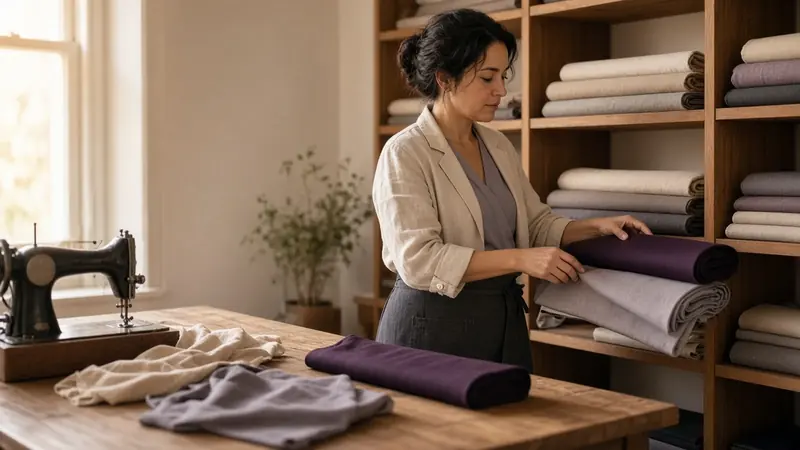
The National Careers Service also says you can begin as an assistant to a master tailor, and may be able to arrange that yourself if you can show sewing skills and real interest. Offering work experience is often an easier first commitment for a shop than a job. Sweeping up, pressing, and sewing on buttons all count. You will be near the work.
Skills to build, in a sensible order
- Hand stitches. Basting, felling, pad stitching, buttonholes. Practise until they are even without thinking. Buttonholes alone will take a long time.
- Pressing. An iron shapes cloth as much as a needle does. New learners tend to underrate it.
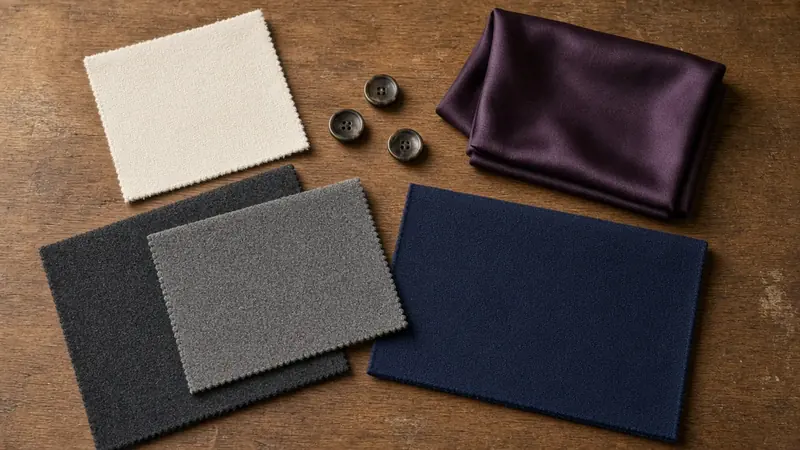
- Knowing cloth. How a heavy flannel behaves against a fine worsted or a silk. How much each one can be shrunk and stretched.
- Trousers and waistcoats. Good training ground, and useful paid work.
- Coats. The canvas, the chest and the sleeve. This is where the years go.
- Measuring and fitting. Learning to see what is wrong with a garment on a body, and knowing what to change in the pattern.
- Pattern drafting. Learn this after you understand how the garment is built.
The same order applies if your work is a kandura, an abaya or a sherwani. The stitches and silhouettes differ, while the logic of fit and hand control carries across. Get your training in the garments you plan to sell.
A University of the Arts London guide adds a practical point: keep a portfolio of what you make, with sketches, mock-ups and notes on your process. A folder of photographs of finished work also helps when you ask for a place.
What the money looks like
The National Careers Service gives UK figures of about £22,000 at the start and £40,000 with experience, on 36 to 39 hours a week. Those numbers are for the UK and may change, so check the current page. Elsewhere, ask working tailors directly. Most will tell you if you ask politely.
Building a client book
A tailor's business is built on returning customers, because each one comes with a pattern and a record of what worked. Start small and keep it tidy:
- Make for people who will wear it often and be seen in it.
- Keep every measurement, pattern and fitting note, even for friends. The second order pays off the effort of the first.
- Photograph each finished garment, with permission.
- Take on alterations in the early days. They bring people through the door, and you learn how other makers build.
- Build relationships with people who already send work your way: shirt makers, cloth merchants and wedding planners.
Going independent
Going alone is a different job from sewing well. You now quote, buy cloth, chase balances, keep promises and do the books. Wait until you can make a full garment without help and you have a few customers who will follow you. Get the price right from the first order, because raising it later is hard. Our guides on starting a tailoring business and what goes into a bespoke price cover those first decisions.
When the order book grows past what a notebook can hold, the page on Tailoq for independent and bespoke tailors shows one way to keep measurements, fittings and stages together.
See how Tailoq supports a bespoke tailor from first order to handover.
Bespoke tailors Book a demo- Tailor job profile, National Careers Service
- Bespoke tailor and cutter, ST0055 v1.0, Skills England
- Bespoke tailor and cutter, ST0055 v1.2, Skills England
- How to become a professional tailor or dressmaker, University of the Arts London
- Becoming bespoke, an interview on training at a London academy
- Bespoke tailoring process, a Savile Row house
- The true cost of bespoke tailoring, Gentleman's Gazette