
- Home
- Measurement sheet
Printable tailor measurement sheet
One A4 page covering six garments, with a tick box for inches or centimetres. Print a stack, keep one per customer, and file them by name.
What is on the sheet
- Customer, phone, order number, date and who took the measurements.
- A tick for inches or centimetres, so nobody has to guess later.
- A tick for body or finished garment measurements.
- Nine measurements each for shirt, trousers, jacket, kandura or thobe, abaya and dress.
- Two columns for each: what you took, and any change after the fitting.
- Lines for posture and fit notes.
How to take the measurements
The customer stands relaxed, feet slightly apart, in light clothing and the shoes they will wear with the garment if length matters. Use a soft tape that has not stretched. Keep it flat and level. Take each measurement twice, and if the two differ, take it a third time.
- Chest or bust: around the fullest part, tape level across the back, one finger under it.
- Waist: around the natural waist. For trousers, measure where the customer actually wears them.
- Seat or hip: around the fullest part, with feet together.
- Shoulder: across the back, from one shoulder point to the other.
- Sleeve length: from the shoulder point, over a slightly bent elbow, to the wrist.
- Inseam: from the crotch to the hem. Measure outseam from the waist to the hem.
- Kandura, thobe and abaya length: from the shoulder to the floor, or to the hem point agreed with the customer. Ask about shoes, and about how much of the ankle should show.
- Abaya sleeve opening and hem width: agree these on the flat with a garment the customer likes.
Body or finished?
Mark this every time. A body measurement has no ease in it. A finished measurement is the garment itself, ease included. Measuring a shirt the customer loves on a flat table is a quick way to get finished figures for that customer's preferred fit. Mixing the two on one sheet is a common cause of a garment that comes out wrong.
Use the second column
When a fitting changes a number, leave the original in place and write the new one under "After fitting". Next time the customer orders, you will know what you measured and what actually worked. Date a new sheet for a new order rather than correcting an old one. We go further into this in measurement app or paper book.
When the folder gets too thick
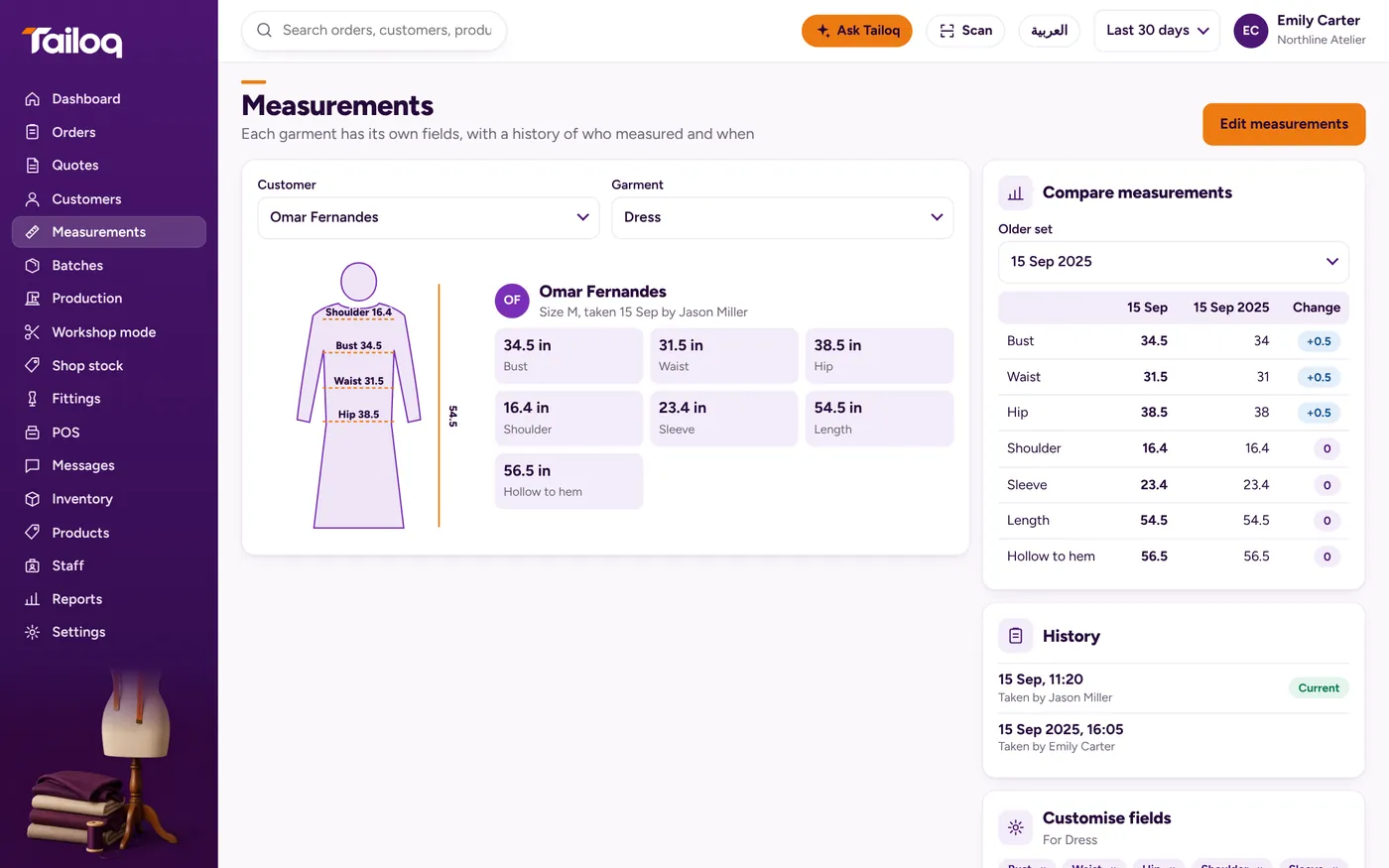
In Tailoq, measurements are kept by garment, each save is a new dated set, and you can compare two sets side by side. You can add or remove fields, so a list like this one can match your shop.