
- Home
- Bespoke tailors
Software for bespoke and made-to-measure tailors
A bespoke suit changes as it is made. Tailoq keeps each dated set of measurements, each fitting and each hour against the garment, so the job on the bench matches what was agreed.
One suit, from consultation to Ready
Take an example order: a two-piece suit and a waistcoat. The waistcoat is wanted a week after the suit. Each garment gets its own job, its own due date and its own place on the board, so a late waistcoat never hides inside a suit that is on time.
The Bespoke preset gives you these stages. Rename, add or reorder them to match your house.
- Consultation. Cloth agreed, deposit taken, first measurements saved.
- Cutting. The cloth is issued to the job, so it leaves stock and joins the job cost.
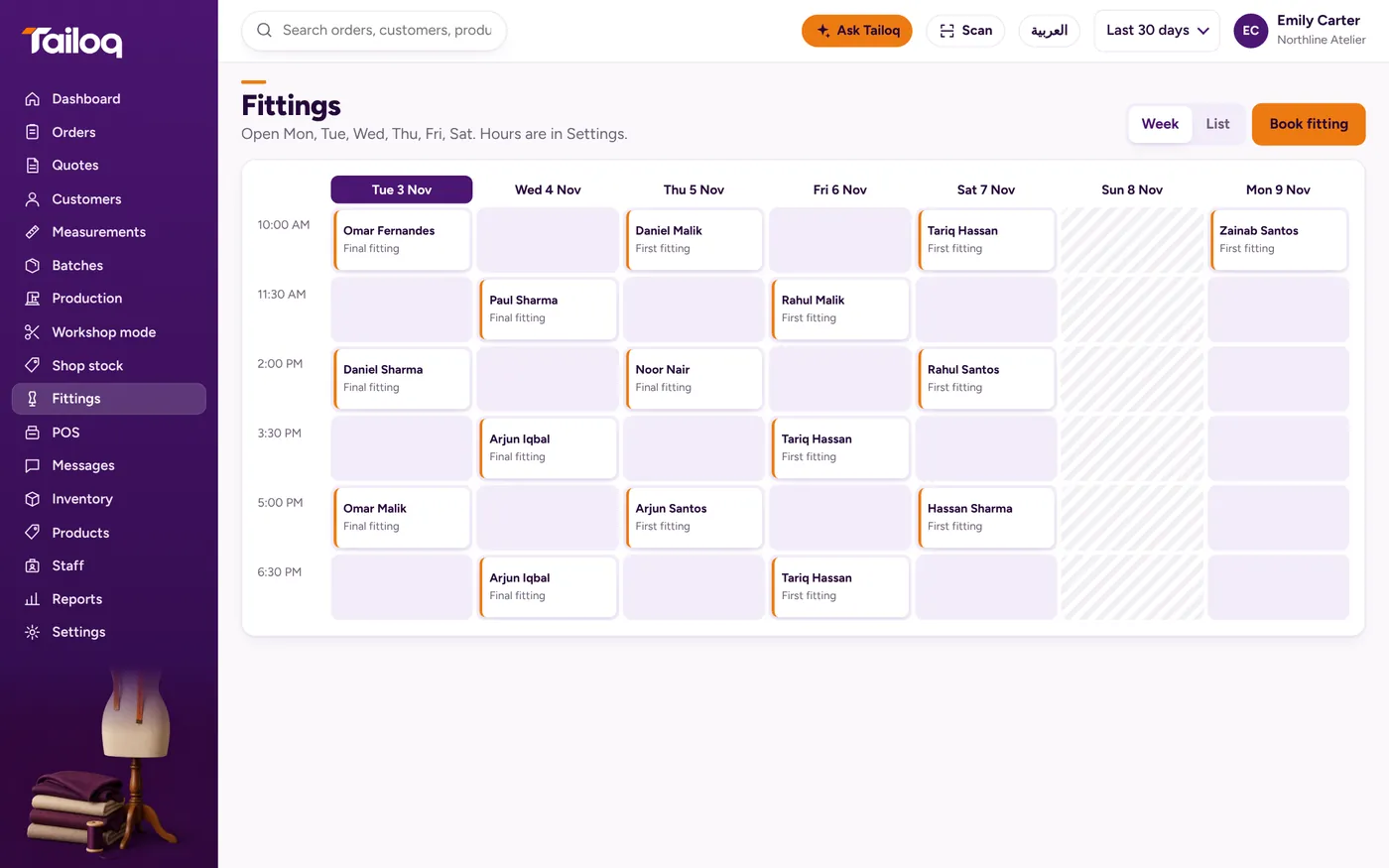
- Baste fitting. Booked on the calendar, with a clash check against your other fittings.
- Stitching. The coat maker opens their own jobs and sees the care note and the materials for the step.
- Forward fitting. Changes are saved as a new measurement set.
- Finishing. The finisher types in the hours spent.
- Ready. Margin shows here. Handover is recorded with a photo and signature.
Measurements that keep their history
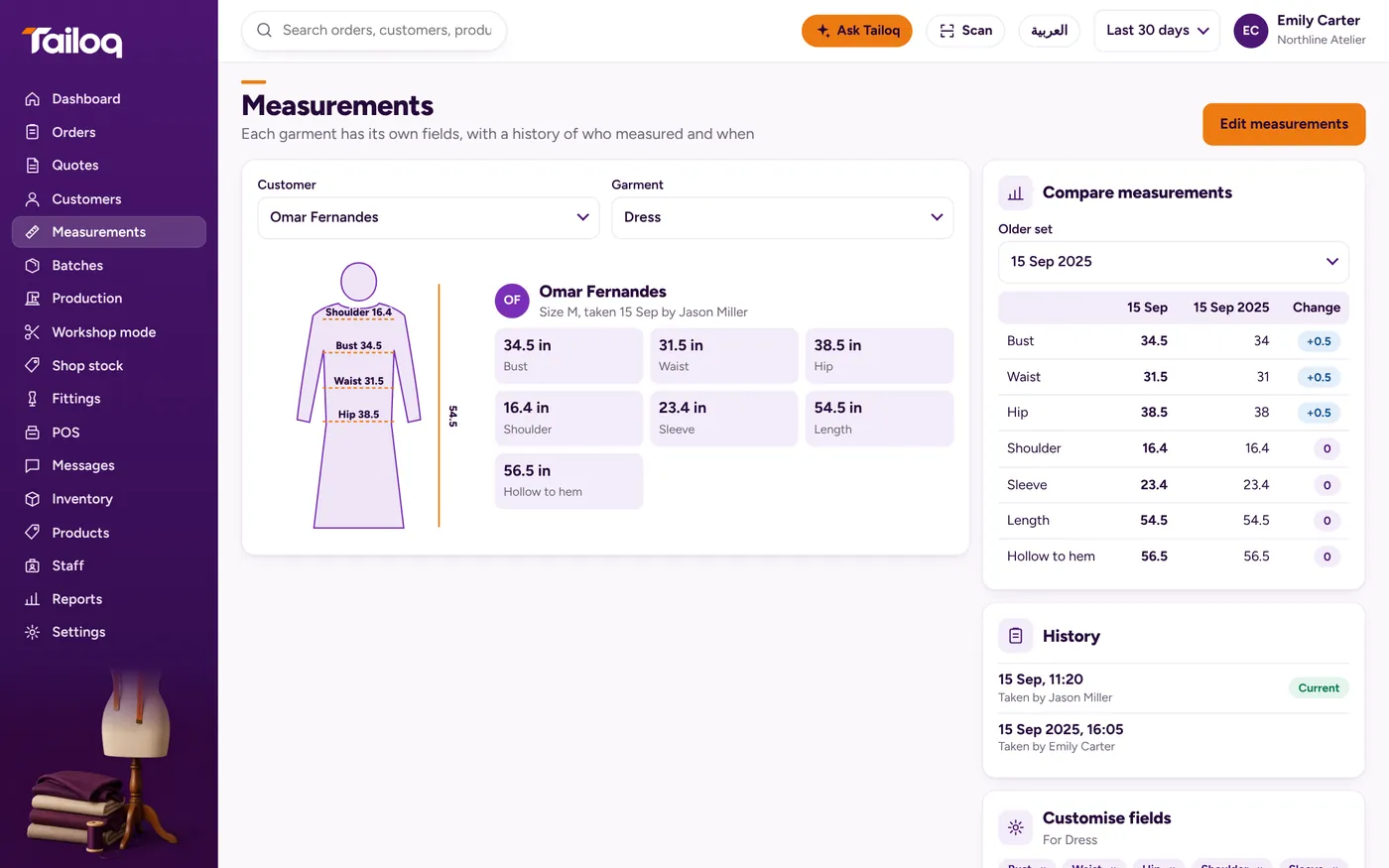
Every save makes a new dated set and the older sets stay. At the forward fitting you can compare two sets side by side and see what moved, such as a waist let out by half an inch since the baste.
Fields are set per garment, so a waistcoat does not carry trouser fields. Add a field if your cutter takes something the list does not have, or remove one you never use. Inches or centimetres is a setting for the whole shop. Moving from a measurement book? Our comparison of an app and a book sets out what changes.
What the suit really cost
Bespoke prices are often set on feel. Tailoq adds up the material issued to the job, the labour typed in and any outside work. A worked example with made-up figures:
| Item | Sum | Cost |
|---|---|---|
| Cloth | 3.5 m at 80 | 280 |
| Linings and trims | as issued | 90 |
| Labour | 45 hours at 20 | 900 |
| Job cost | 1,270 |
If the customer brought their own cloth, mark it as customer-supplied. Nothing is issued from your stock, so the same job costs 990. If someone forgets to type hours, the job uses a standard estimate and marks it Standard, so you can tell a guess from a real figure.
Made-to-measure runs differently, and has its own preset
Made-to-measure usually works from a pattern block with no baste fitting. Choosing the preset gives you a different flow and adds a QC stage.
| Bespoke preset | Made-to-measure preset |
|---|---|
| Consultation | Order placed |
| Cutting | Pattern |
| Baste fitting | Cutting |
| Stitching | Stitching |
| Forward fitting | QC |
| Finishing | Ready |
| Ready |
At QC, a reject goes back to the stage you choose, with a reason and an optional photo. Doing both kinds of work? Keep the stages that fit and add the rest. See how production stages work.