
- Home
- Bridal ateliers
Software for bridal ateliers
A wedding gown has a date that cannot move and embellishment that is easy to lose track of. Tailoq keeps the fittings, the handwork and the beads against the one gown they belong to.
One gown through ten stages
The Bridal and couture preset is the longest we ship, because a gown needs it:
- Consultation. Order opened with the event date and a care note. Deposit taken.
- Design. The job waits here, with one named person, until the design is agreed.
- Toile fitting. The shape is proved before good fabric is touched.
- Cutting. Fabric issued, with the dye lot recorded.
- First fitting. New measurements saved as a new dated set.
- Embroidery. In-house or sent out, see below.
- Stitching. One named person holds the stage.
- Second fitting. Compare against the last set to see what changed.
- Final fitting. Last changes.
- Ready. Handover with a photo and signature, and the balance cleared.
The same flow suits a bridal lehenga or a couture dress. Rename or reorder any stage. There is no QC stage in this preset, so add one before Ready if a second pair of eyes checks every gown.
Embellishment, counted the way you buy it
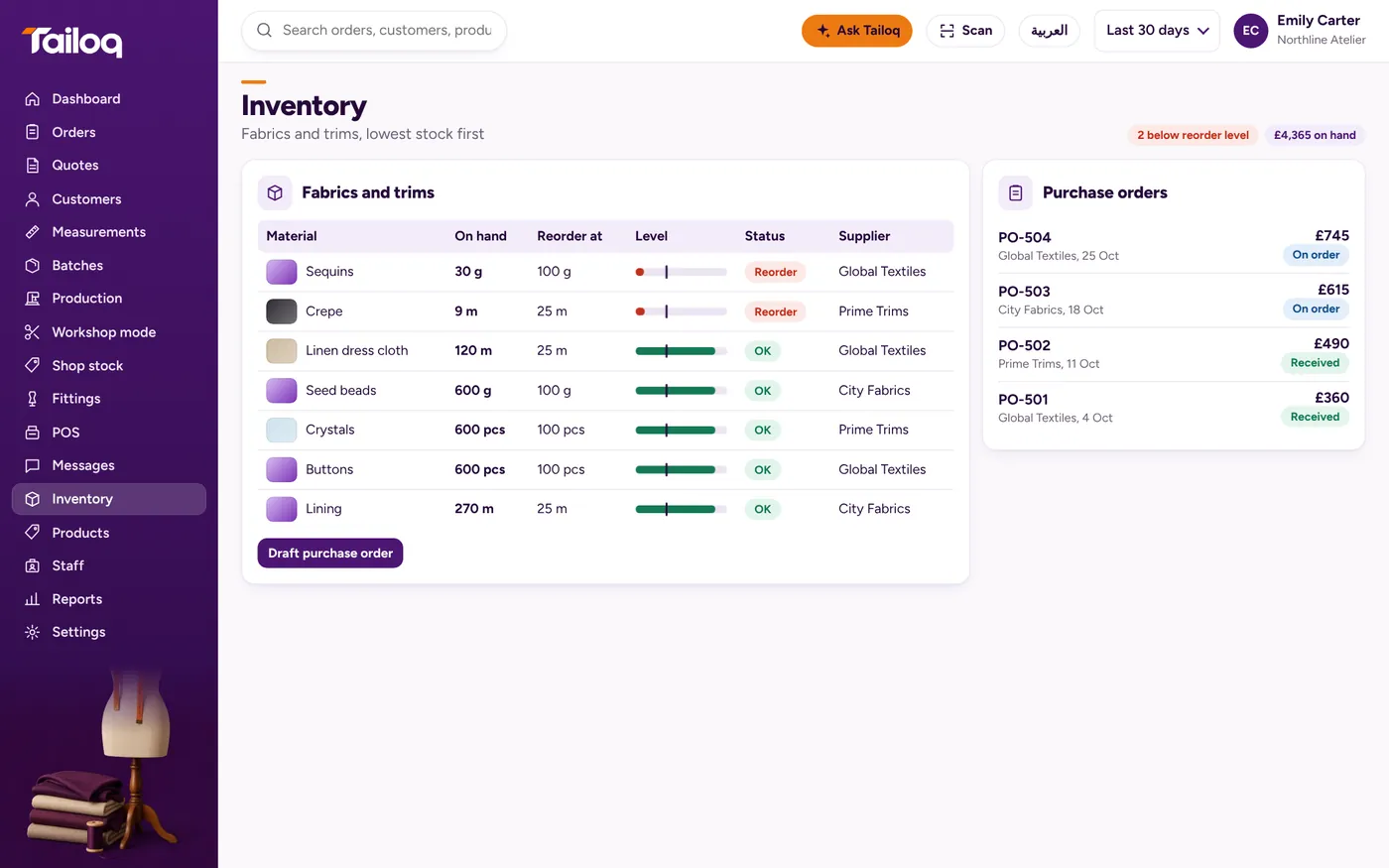
Tailoq holds each material in its own unit: beads and sequins by the gram, fabric by the metre, crystals by the piece. Handwork is where stock quietly disappears, so issue and return matter here.
An example: the embroiderer is issued 180 g of seed beads and returns 35 g. The gown used 145 g, and that is what reaches its cost. Stock will not go below zero, and a reorder warning shows when the issue takes a material under its level. If beads are lost, log it as wastage under Beading loss, and it shows up by reason and by person. Our guide to tracking beads and crystals covers the routine in more detail.
When the embroidery leaves the building
Plenty of ateliers send beading out. From the Embroidery stage, send the job to an outside workshop with the vendor, expected date and cost. The materials go with it. It moves to its own Outside lane and shows as overdue if the date passes. When it comes back short, the shortfall is logged as vendor wastage against the job.
What one gown cost to make
A worked example with made-up figures, in any currency:
| Item | Sum | Cost |
|---|---|---|
| Fabric | 9 m at 60 | 540 |
| Beads | 145 g at 2 | 290 |
| Crystals | 400 pieces at 0.50 | 200 |
| Labour | 60 hours at 15 | 900 |
| Outside embroidery | one job | 700 |
| Job cost | 2,630 |
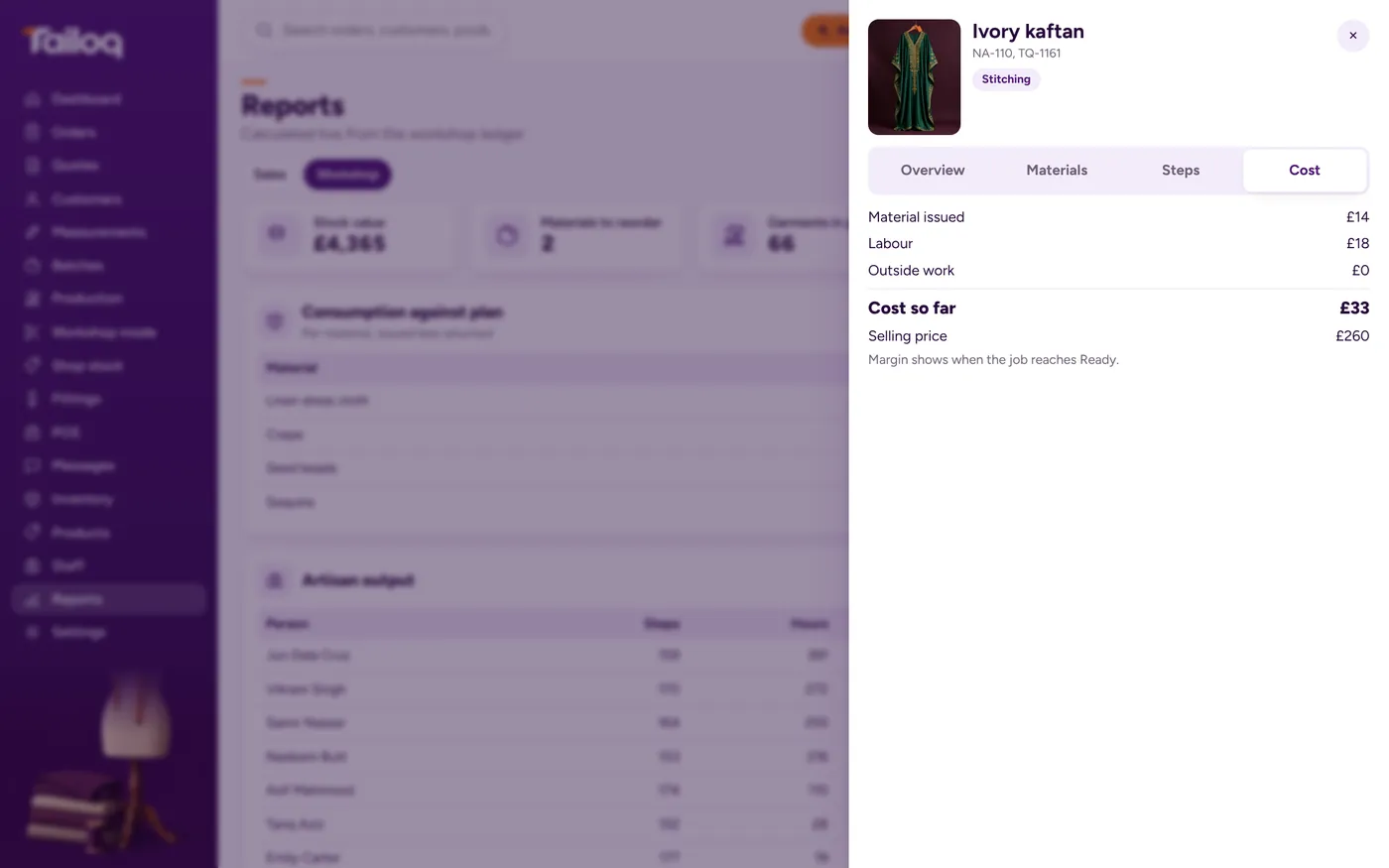
Tailoq adds this up from issued material, typed-in hours and outside work, then shows margin at Ready. Compare it to your price while there is still time to adjust the next quote.
Fittings and the bride's questions
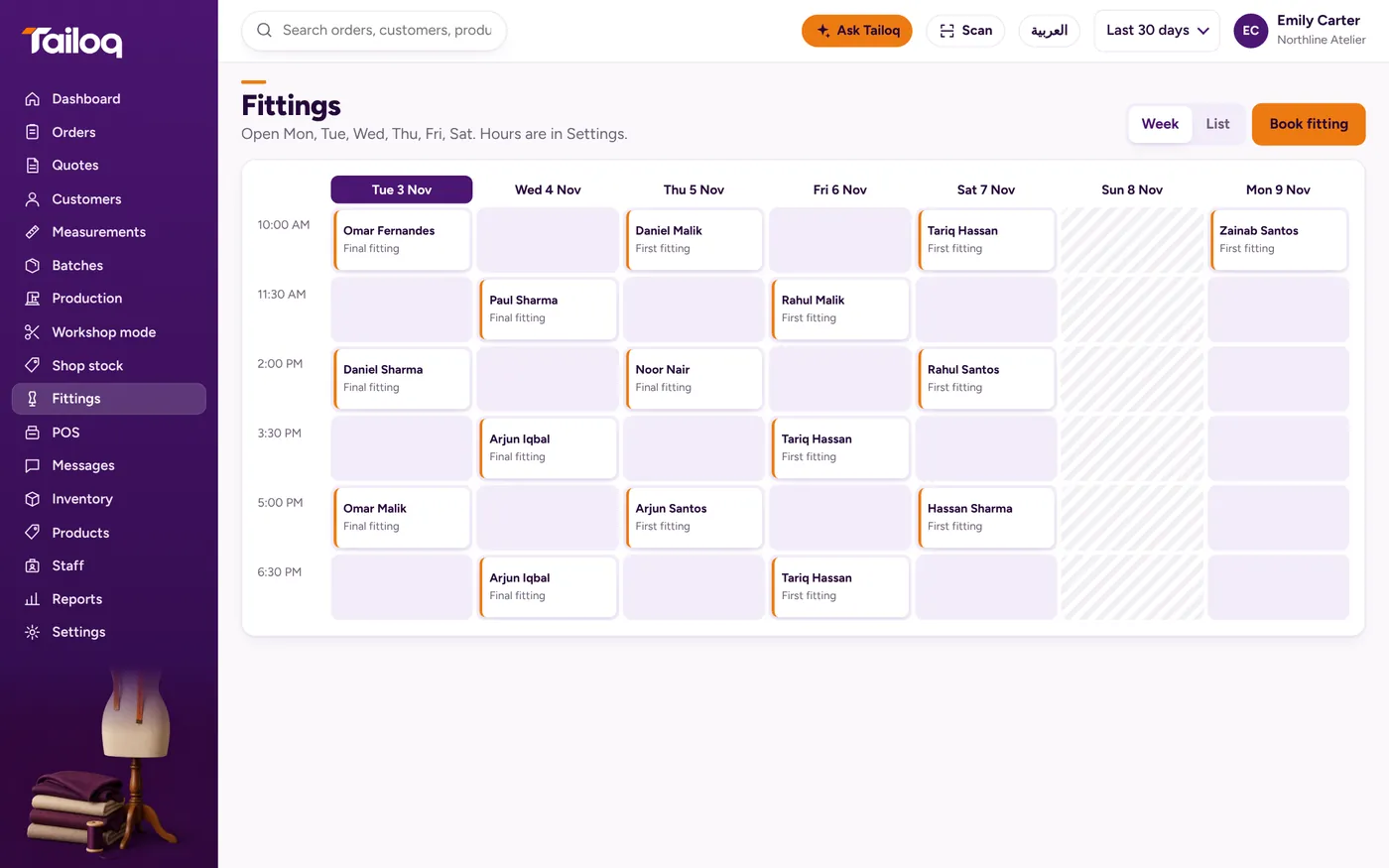
The fittings calendar checks for clashes and closed days. It books within the coming seven days, so plan the later fittings as stages on the job and book each one as it comes close. Fitting names come with the preset, so Toile, First, Second and Final read as they do on the board.
The customer tracking page shows the stages, promised date, amount paid and balance, which answers the question you hear most often: where is my dress?