
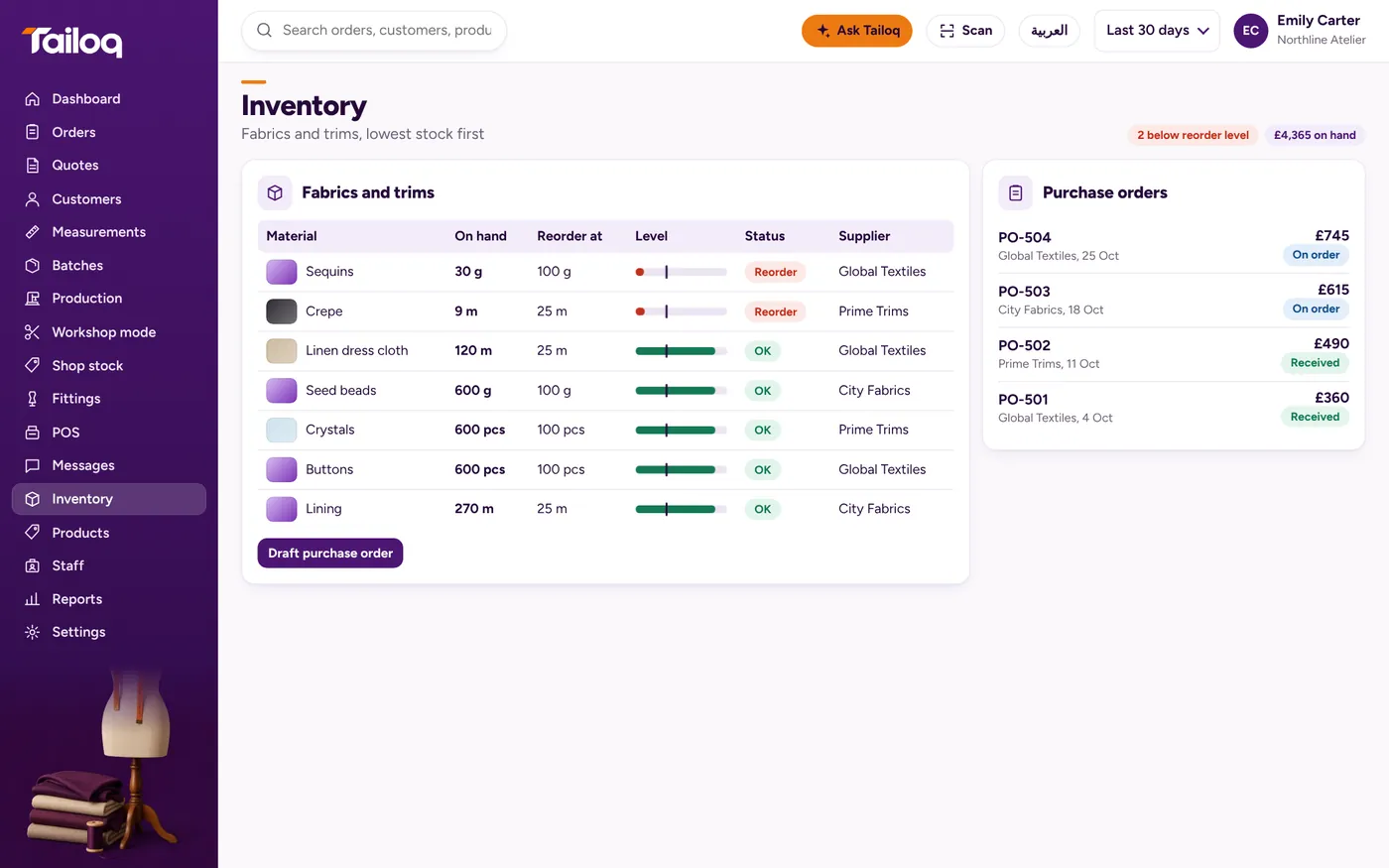
Each material in the unit you buy it
Beads and sequins by the gram, fabric by the metre, crystals by the piece. A spool of thread stays a spool.
That matters on an embellished abaya or a bridal gown, where small quantities of costly stones decide whether the job paid. Our guide to tracking beads and crystals goes through the method, and there is more for bridal ateliers and abaya and kandura makers.
See the materials before you cut
When you plan a batch, Tailoq shows the materials it needs, so a shortage turns up at the planning table and not halfway through a run.
Issue, return and a ledger behind it
Materials are issued against the job. Tailoq blocks an issue that would take stock below zero and warns you when it drops to the reorder level. Leftovers go back in as a return. Every movement lands in a ledger, and a dye lot can be recorded so a re-cut can be matched.
Example: issue 120 g of seed beads to a gown. 18 g come back. The job has used 102 g, and the ledger shows both movements.
The workshop can ask for what it needs from the bench. A material request goes to Inventory and the stock is issued when it is marked done.
Wastage you can put a name to
Wastage is logged with a reason: cutting error, beading loss or stain, plus vendor shortage for work that comes back short. Reports show its value by reason and by person.
Read it next to cost per piece, and a bad week on the cutting table shows up as money.
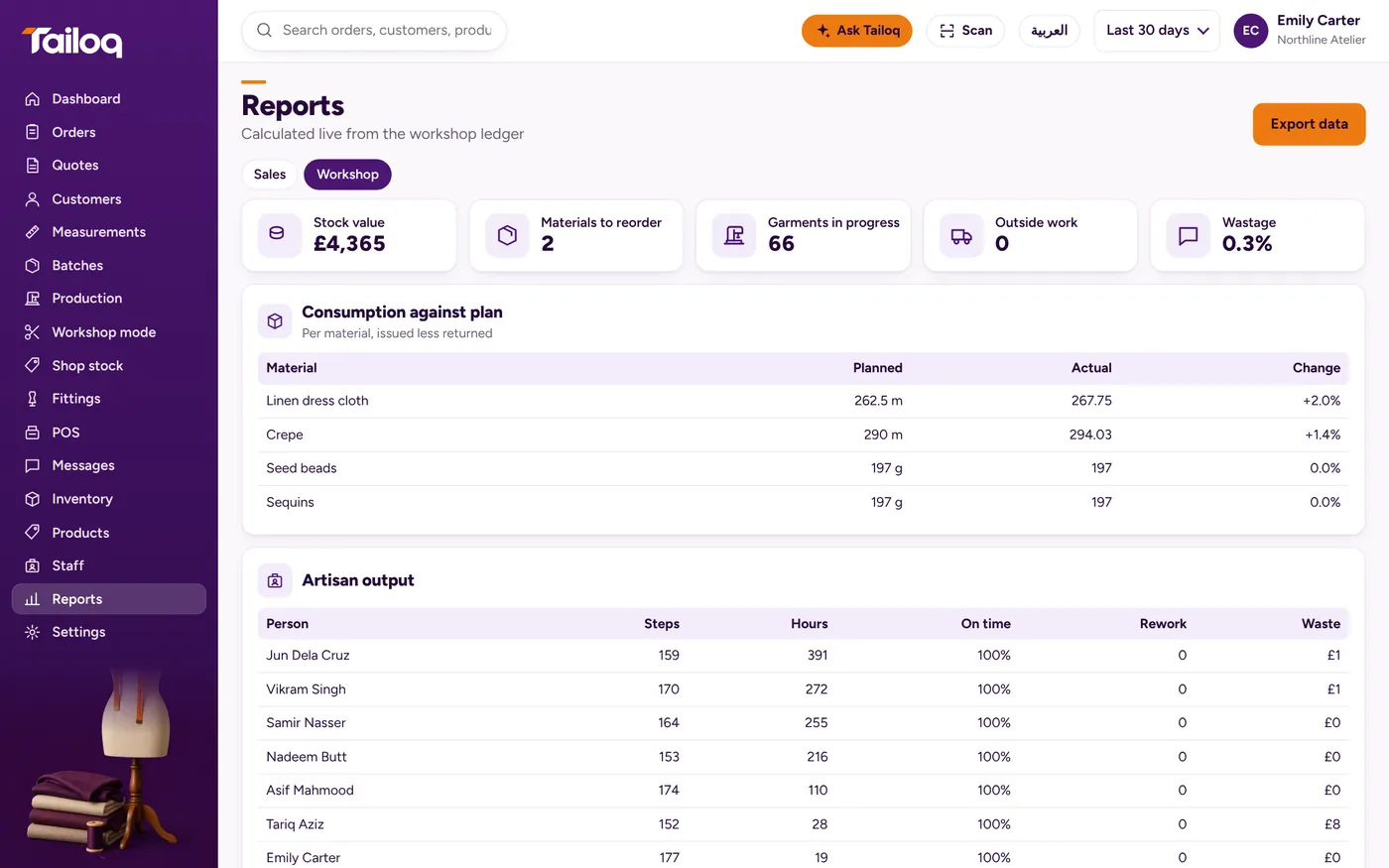
Purchase orders and goods received
Tailoq drafts purchase orders from items below their reorder level, grouped by supplier. Mark each one sent when it goes.
When the delivery arrives, enter what was received and what was rejected on each line. Stock and the ledger update from that, and a short delivery stays part received.