
- Home
- Boutiques
Boutique software for makers who sell what they make
You make it, you display it, you sell it. Tailoq follows a piece from the cutting table to the rack to the till, and back to the workshop if it needs taking up.
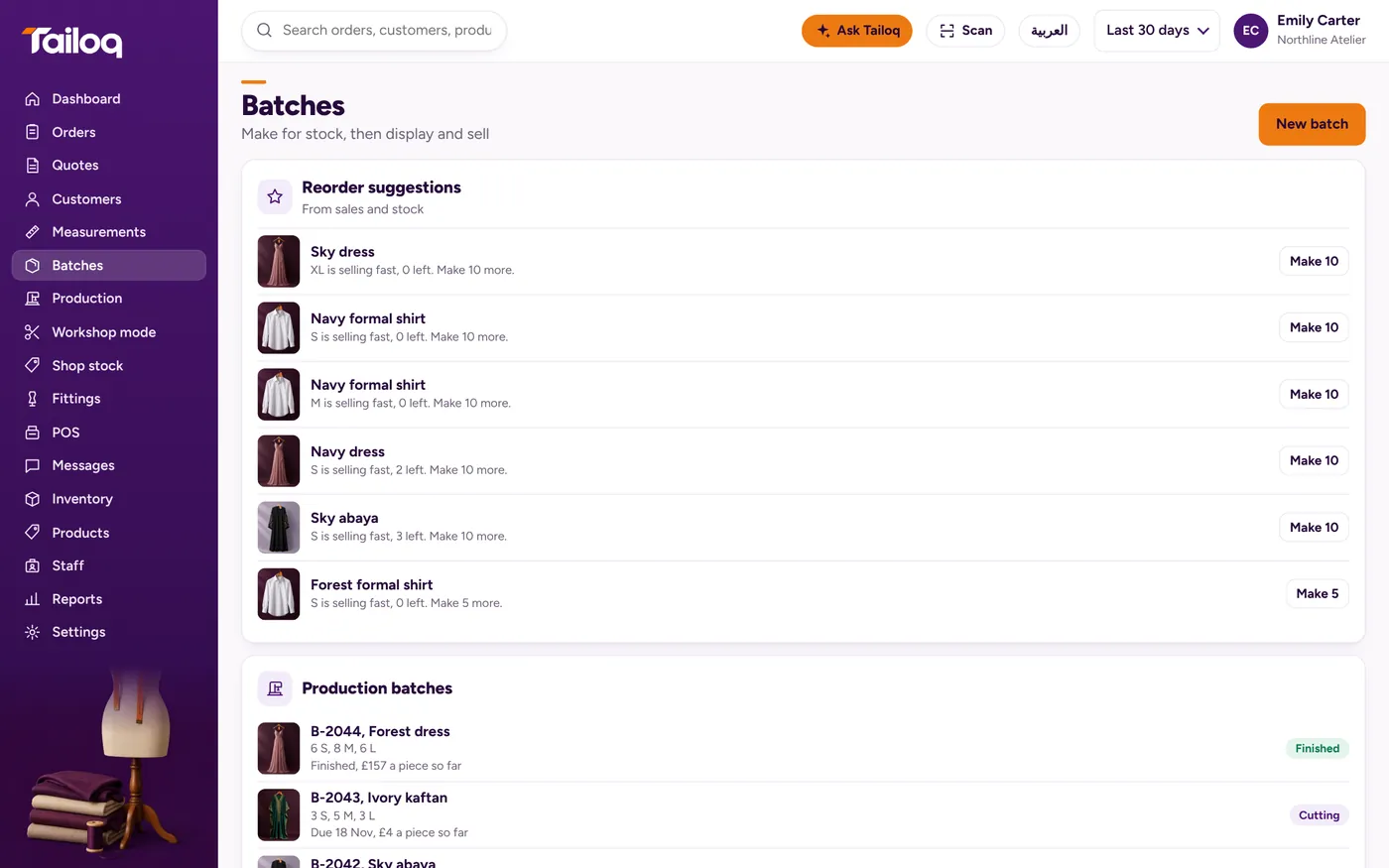
Most boutique systems start at the rack
A retail POS assumes stock arrives in a box from a supplier. Yours comes from your own workshop, so the useful questions come earlier. What will this style cost to make? Which size is about to run out? Is the batch coming back from embroidery on time?
Tailoq treats making for stock and making for a customer as two sides of the same day. A rack piece and a made-to-measure order share one workshop, one board and one set of materials.
One kaftan style, from cut to rack
Take an example batch of 24 kaftans: 6 small, 10 medium, 6 large and 2 extra large. Before you cut, you see the materials the batch needs and what is in stock. The Boutique preset then runs these stages:
Confirmed, Cutting, Stitching, Hand embroidery, Beading/crystals, Finishing, Pressing, QC, Ready.
- Hand embroidery. Sent to an outside workshop with an expected date and cost, it sits in its own lane and shows as overdue if it runs late.
- QC. Two mediums fail on a stain. Split them off, return them to the stage you choose with a reason and photo, and let the other 22 carry on.
- Ready. Finished pieces are tagged and enter stock.
- Transfer. Pieces travel from the workshop to the shop and show as in transit until the shop runs a received check.
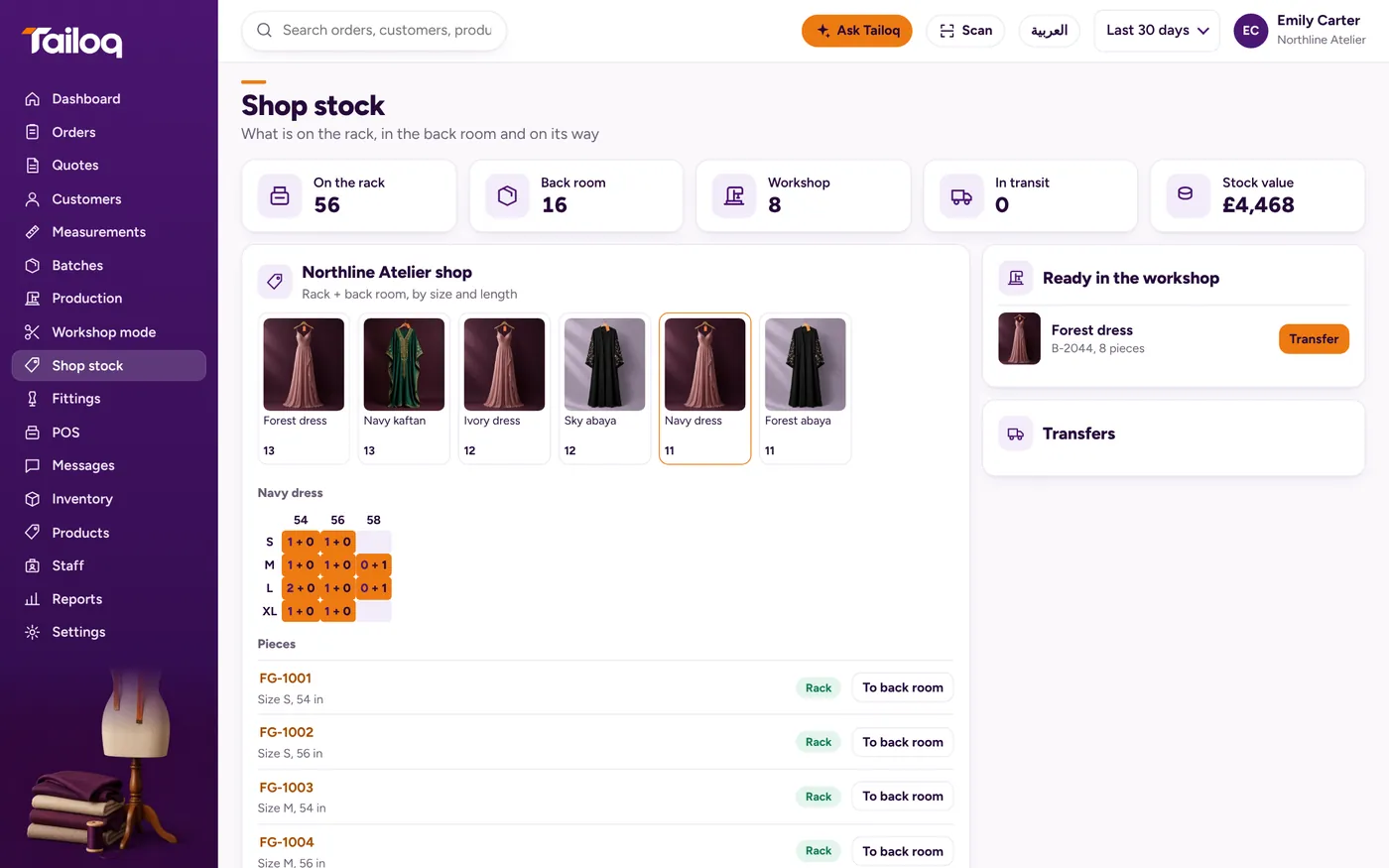
Display: know what is on the rack and what is out the back
Stock is split by shop into rack, back room, workshop and in transit. A size-by-length grid shows the gaps in a style at a glance, which matters when a size is on the rack in one length and gone in another.
Reorder suggestions compare 30 days of sales with stock and running batches, so the next batch comes from what sold. If you are checking a style by hand, our guide to calculating garment cost shows the sum to run before you commit.
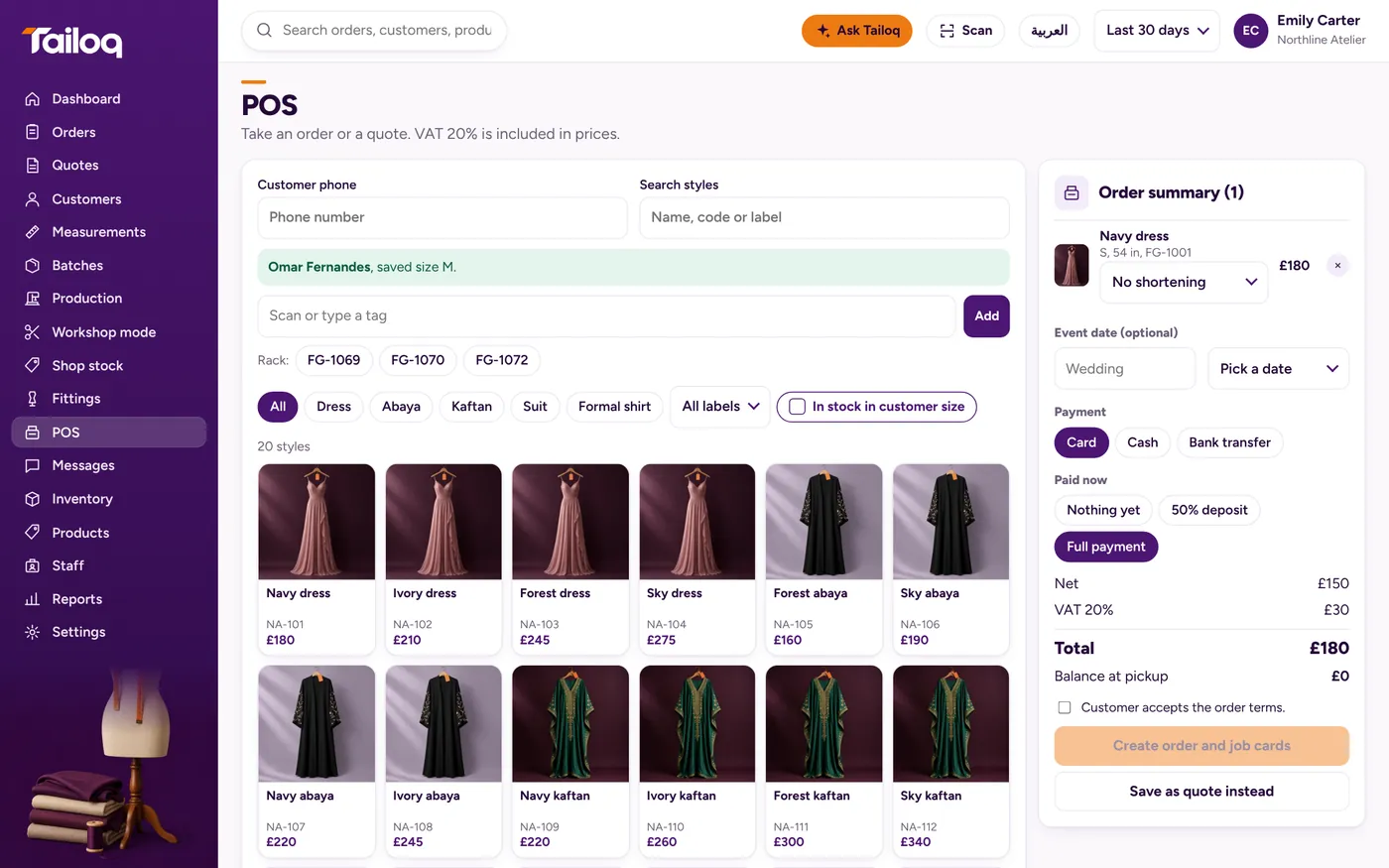
At the till, a shortening becomes a workshop job
A customer loves a kaftan but it is two inches too long. Scan or type the tag at the POS, and enter the length to shorten it to. The sale goes through, and an alteration job appears in the workshop at the sewing stage. Nobody writes a note that gets lost.
The till also handles:
- Style search, with size, length and a stock check.
- A deposit of nothing, 50% or the full amount, with later payments and the balance on the order.
- Tax-inclusive prices, with net and tax shown. An example at a 20% rate: a price of 600 is 500 net plus 100 tax. A 50% deposit takes 300 and leaves 300 to pay.
Each sale is recorded against a customer, and tax figures show on screen. Returns, refunds and discounts are not in Tailoq yet. If your shop relies on them daily, keep that in mind.
Ethnic wear and made-to-measure in the same shop
Plenty of boutiques sell ready pieces and also take orders for a sherwani, a saree blouse or a kebaya. The Ethnic wear preset runs Order placed, Cutting, Stitching, Hand work, Finishing, Ready, with hand work as a stage of its own. Customer orders use measurements and fittings, and they sit on the same board as your batches. Read more about the POS and shop stock.