
What goes into the cost
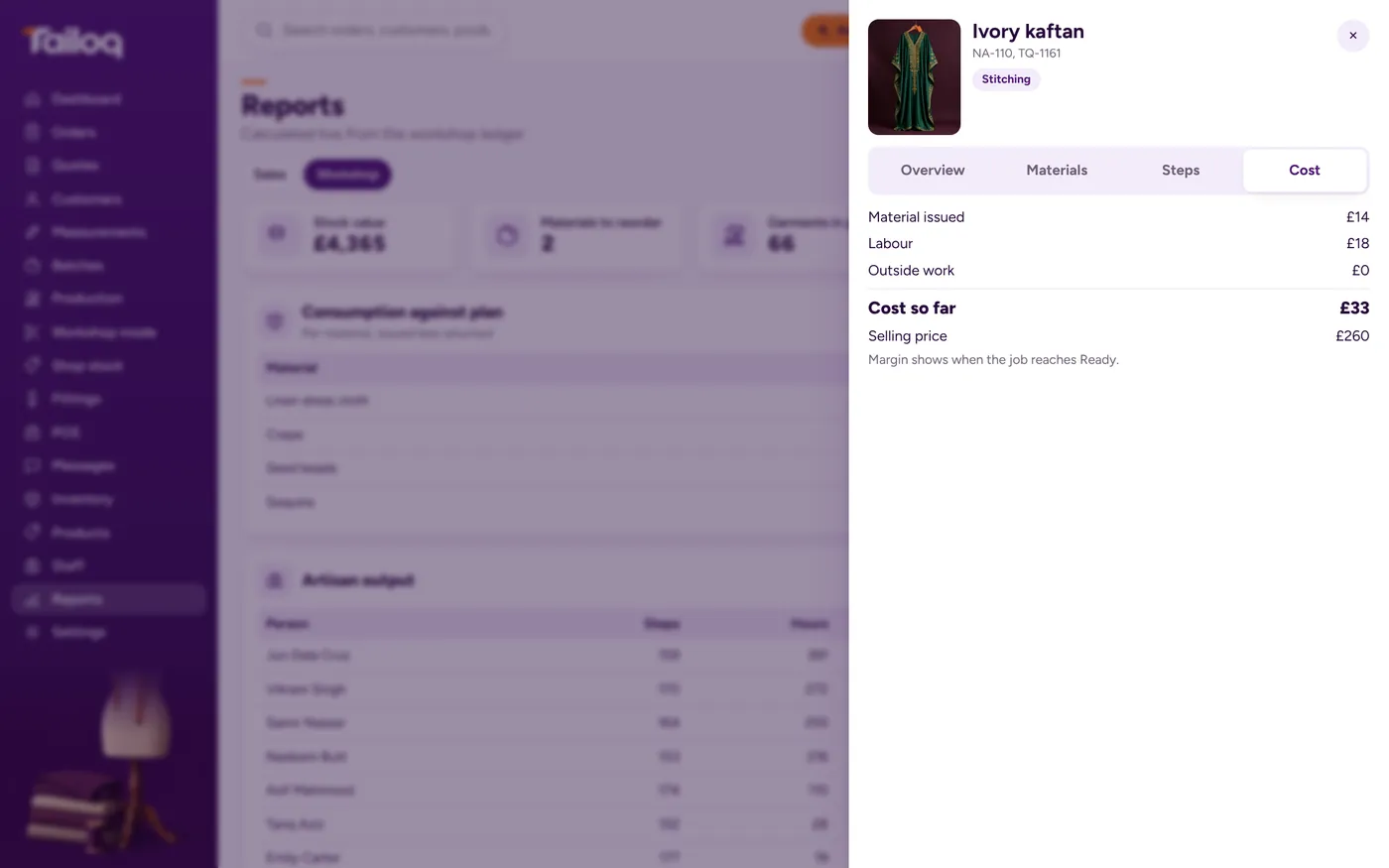
Cost per piece is issued material, plus labour, plus outside work. The figures come from what was issued from stores, the hours entered at the bench and the outside work recorded on the job.
The table below is an invented example of one hand-beaded abaya, in plain numbers.
| Item | Working | Cost |
|---|---|---|
| Fabric | 3.5 m at 20 | 70 |
| Beads | 40 g at 0.50 | 20 |
| Labour | From hours at the bench | 60 |
| Outside embroidery | Vendor cost | 50 |
| Cost per piece | 200 |
On a job with several pieces, Tailoq also gives a per-piece line. For example, a job costing 4,000 across 20 kanduras comes to 200 a piece.
Margin at Ready
When a job reaches Ready, Tailoq shows its margin, by job and by label.
Continuing the example, a price of 525 including 5% VAT is 500 net plus 25 tax. Tailoq shows a margin of 325 (525 less 200). The margin after tax is 300.
When nobody entered the hours
Hours are typed in by the person who did the work. If they are left blank, Tailoq falls back on a standard estimate and marks it Standard, so you can tell a measured cost from an assumed one.
Where the money leaks
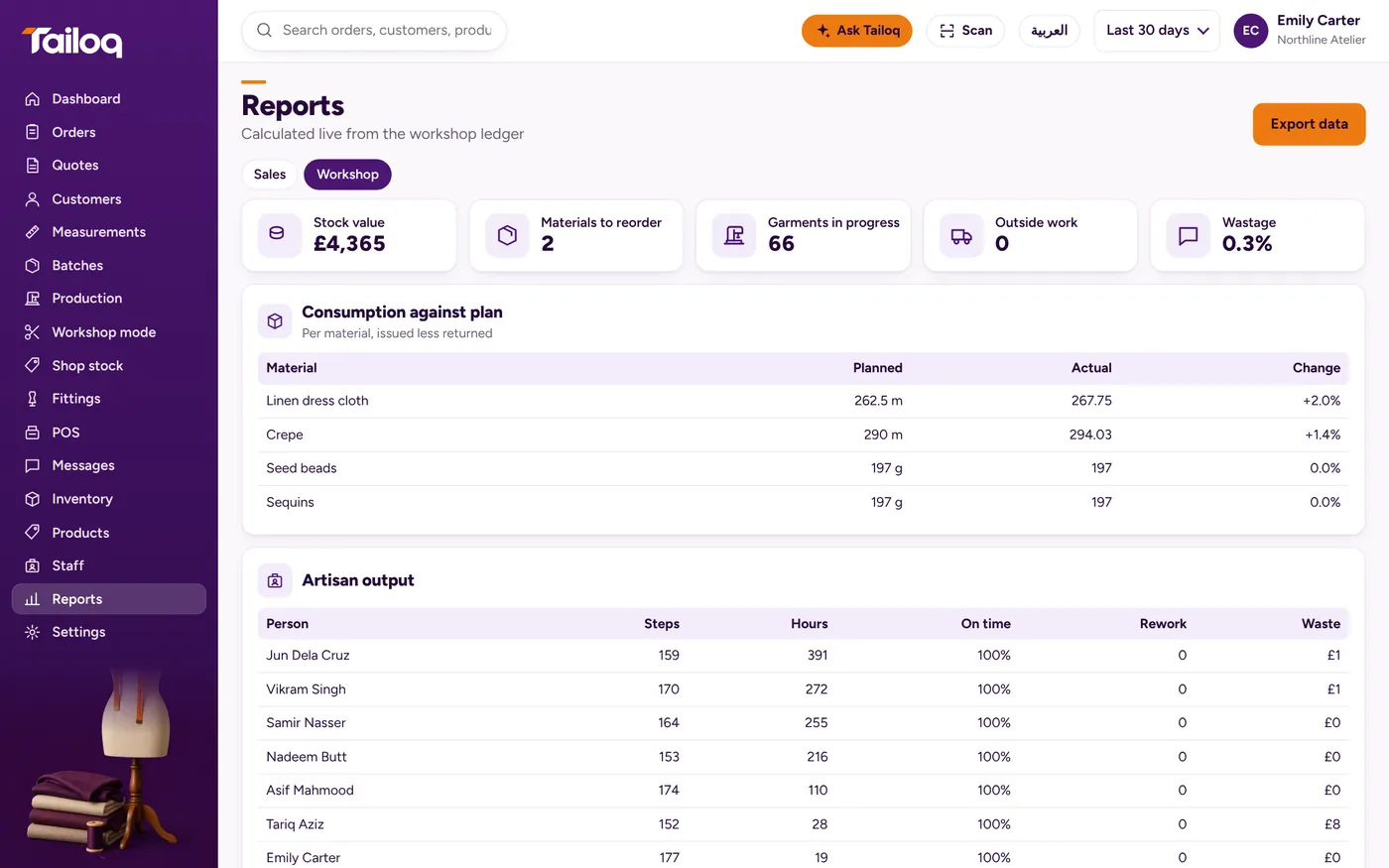
Wastage is reported by reason and by person, with its value. Rework is logged on each job and counted per person in artisan output. The workshop report also sets consumption against plan and breaks it down by style.
Together these show which style costs more than you quoted, and which step is causing it.
Using it to price
Once a few jobs have been costed, your price list can rest on them. Our guides on how to calculate garment cost and building a tailor price list walk through it, and the garment cost sheet works on paper too.
This suits bridal ateliers and boutiques with a workshop, where a single piece can carry a lot of hand work.