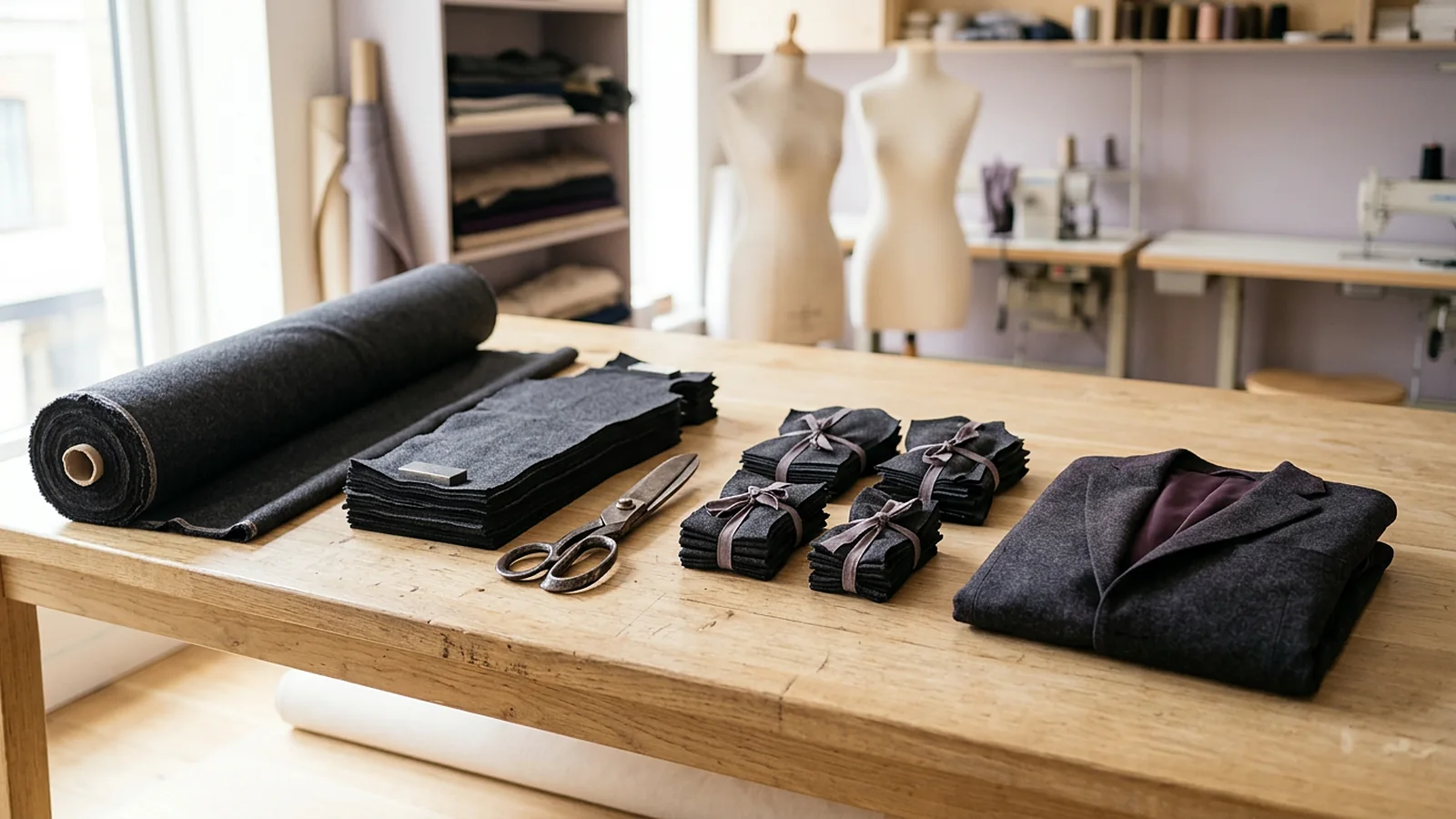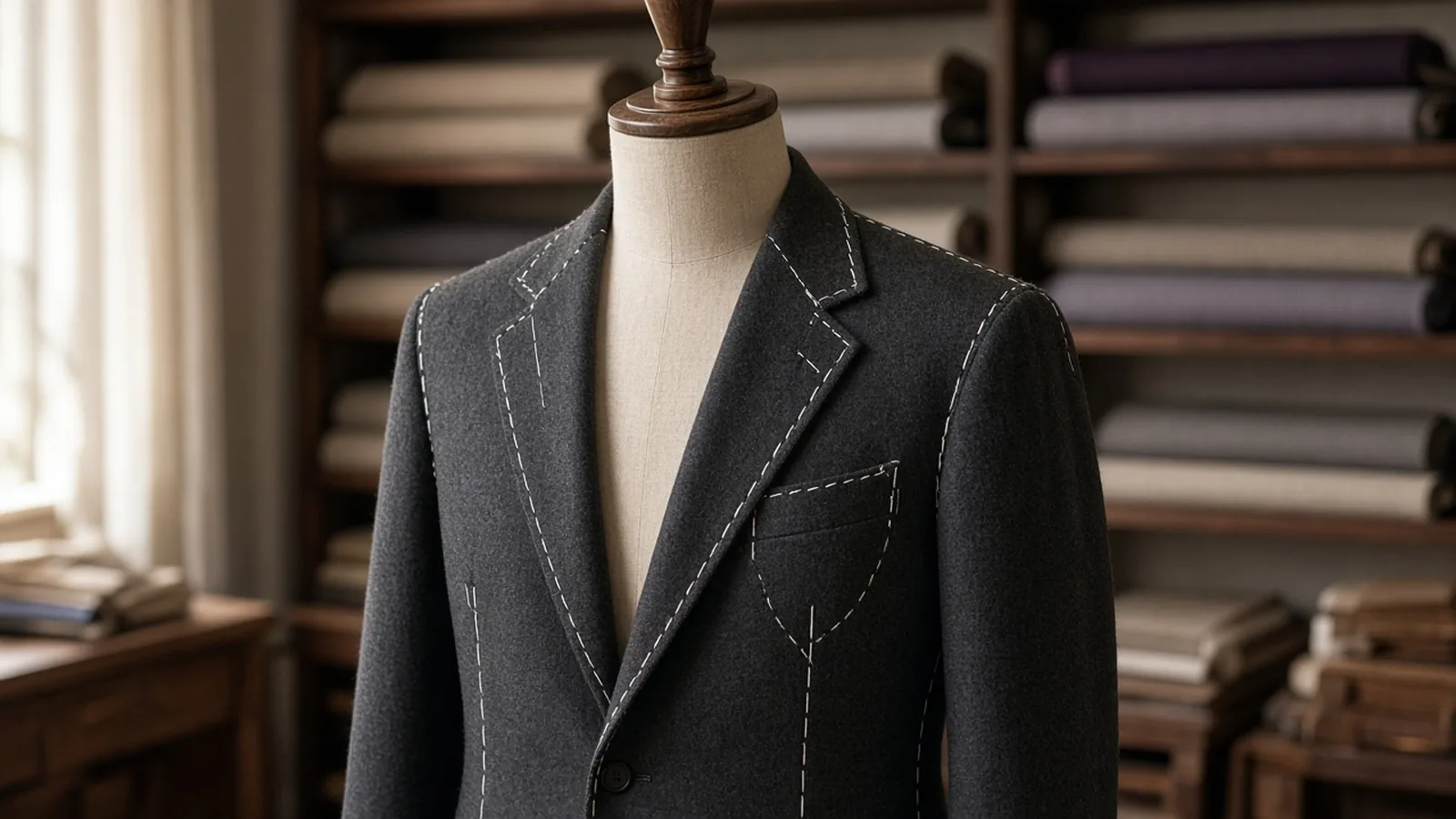
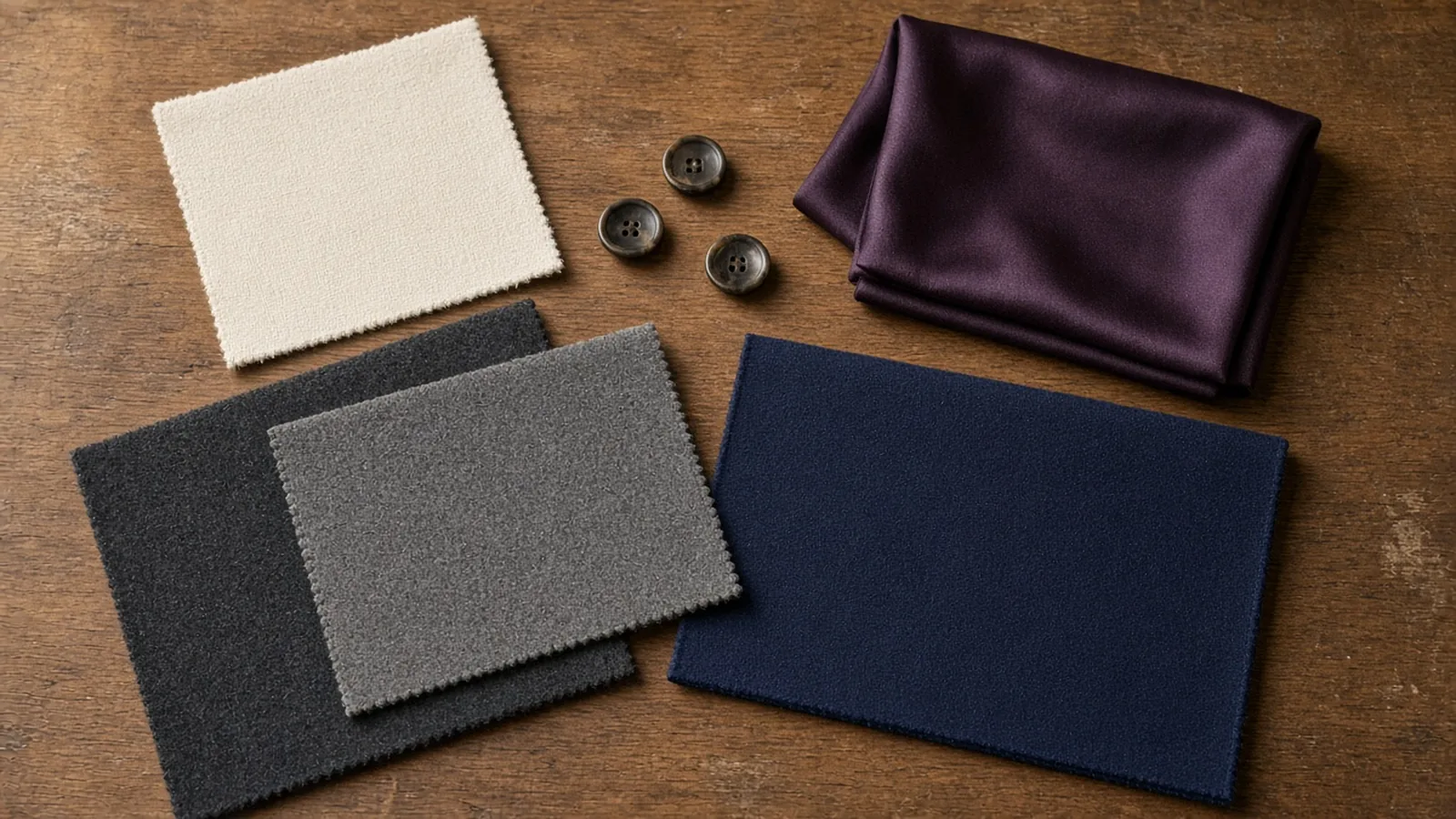
There is no single answer to what bespoke costs, because a figure from one city says little about a shop in another. Rent, wages and cloth all move. So this guide looks at what the price is made of, and that part holds in any currency.
What published figures show
A few reference points, all dated or undated as marked, and none of them a market price for your town:
- A 2014 breakdown by a menswear writer put the average Savile Row two-piece at £4,800, with about £1,565 of that going on production.
- In a 2008 report, Savile Row suits were described as costing over £3,000.
- One undated European guide lists bespoke from 3,500 euros, tailor-adapted made to measure from 1,800 euros, and salesperson-adapted made to measure from 600 euros.
The 2014 breakdown is useful for its structure more than its totals:
| Part of the suit | Cost per suit (2014, £) |
|---|---|
| Coat making | 700 to 800 |
| Trouser making | 220 to 260 |
| Cloth | 200 to 240 |
| Trimmings: canvas, lining, silk thread, horn buttons | 100 to 110 |
| Cutting | 200 to 300 |
| Total production | 1,420 to 1,710 |
Labour is by far the largest share of that table. The rest of the £4,800 went on rent, sales staff, travel, marketing, insurance, administration and margin. The cloth, which is the part the customer handles and talks about, is one of the smaller lines.
The six parts of a bespoke price
Cloth
Cloth is the main variable. One London tailor says most tailors base their suit prices on it. Rare cloth can move a price a long way. Measure the length needed for the size and for the pattern: checks and stripes need extra for matching.
Trims
Canvas, haircloth, lining, pocketing, thread and buttons add up to a line of their own. Price them once for a standard suit, then adjust for a horn button or a printed silk lining.
Hours per stage
Time each stage on real jobs. Pattern, cutting, basting, making up and finishing all differ, and a double-breasted coat is a different job from a single-breasted one. Simpler is not always cheaper. The tailor above puts the making cost of a skeleton jacket at about 50% higher, because the inside has to look finished.
Fittings
A fitting is paid work. The customer's hour is often the small part of it. The time to unpick, re-mark, correct the pattern and re-baste can take far longer. Decide how many fittings the price includes, and write it down.
Outside work
Monograms, embroidery, specialist buttonholes or a shirt maker's collar may go to someone else. Count the charge, and count the delivery trip too.
Overheads and capacity
Bespoke has no economies of scale. The London tailor above says a coat costs the same to make whether you make one or many. So your price must carry your overheads across a small number of garments. He also estimates that a newer maker finishes about one coat a week and an established maker about two. Your capacity sets a ceiling on your income, and your price has to work within that ceiling.
Trunk shows and travel to clients add flights and hotels. If you do them, price them in or charge them separately.
A worked example
Example only. A two-piece suit, in no particular currency, at a shop rate of 30 an hour. The shop rate is monthly costs divided by chargeable hours, so it already includes overheads and wages. Our tailor price list guide shows how to work yours out.
| Line | Working | Cost |
|---|---|---|
| Cloth | 3.5 m at 40 | 140 |
| Trims | Canvas, lining, thread, buttons | 90 |
| Pattern and cutting | 8 hours at 30 | 240 |
| Coat making | 40 hours at 30 | 1,200 |
| Trouser making | 12 hours at 30 | 360 |
| Fittings | 3 fittings, 1 hour each, at 30 | 90 |
| Corrections after fittings | 4 hours at 30 | 120 |
| Outside work | Monogram | 60 |
| Total cost | 2,300 |
Add 25% for profit, which is 575, and the price comes to 2,875. Round to 2,900 for the quote. Add tax if your country charges it and your price does not include it. At a 50% deposit the customer pays 1,450 up front, which covers the cloth, the trims and the cutting, with money left over for the first days of making.
How to protect the margin
- Keep labour and cloth apart in your head. If you price a cloth upgrade as a percentage of the whole suit, you may be overcharging or undercharging for the same hours of work.
- State what is included. Number of fittings, standard lining, standard buttons. Everything else is an add-on with its own price.
- Charge for changes after cutting. If a customer changes the style after the baste, that is new work.
- Take the deposit before you cut. Cloth cut to one person's pattern cannot be sold to anyone else.
- Compare the quote with the job afterwards. If a suit priced at 67 hours took 85, one of two things needs fixing: the price or the method.
That last check is the one most shops skip, because the numbers are scattered across a notebook, a wage sheet and a receipt book. Our garment cost sheet is a simple way to start, and the guide to calculating garment cost covers batch work as well. Tailoq can help once you want it in one place: job costing built from issued material, labour and outside work, set against the selling price when the job reaches Ready.