Most descriptions of the bespoke process are written for the customer. This one is written for the person running the order. The stages below follow what one Savile Row house publishes about its own process, along with common trade practice. Your shop may merge or split them, and a sherwani or a bridal gown will add stages of its own.
For scale, the Savile Row Bespoke Association gives a typical suit as about fifty hours of work, three intermediate fittings and around three months from order to finished garment. One London tailor publishes 9 to 12 weeks in total. Treat these as reference points. Your own dates come from your own workload.
1. Consultation
The conversation decides more than the cloth. Where will this be worn? How often? In what climate? The cutter also forms a view of how the customer stands and moves.
Record: occasion and date, cloth choice, style details, agreed price and deposit. If there is a fixed event, write it down first and plan backwards from it.
2. Measurements
Numbers are half the job. The house above takes about 35 measurements plus figuration notes and photographs. Figuration means the things a tape cannot express: a sloping shoulder, a prominent seat, one arm carried forward.
Record: every measurement, the date, who took them, and the notes. Keep the old set when you take a new one, so you can see how a customer has changed. Our guide to measuring for tailoring covers the method.
3. Pattern
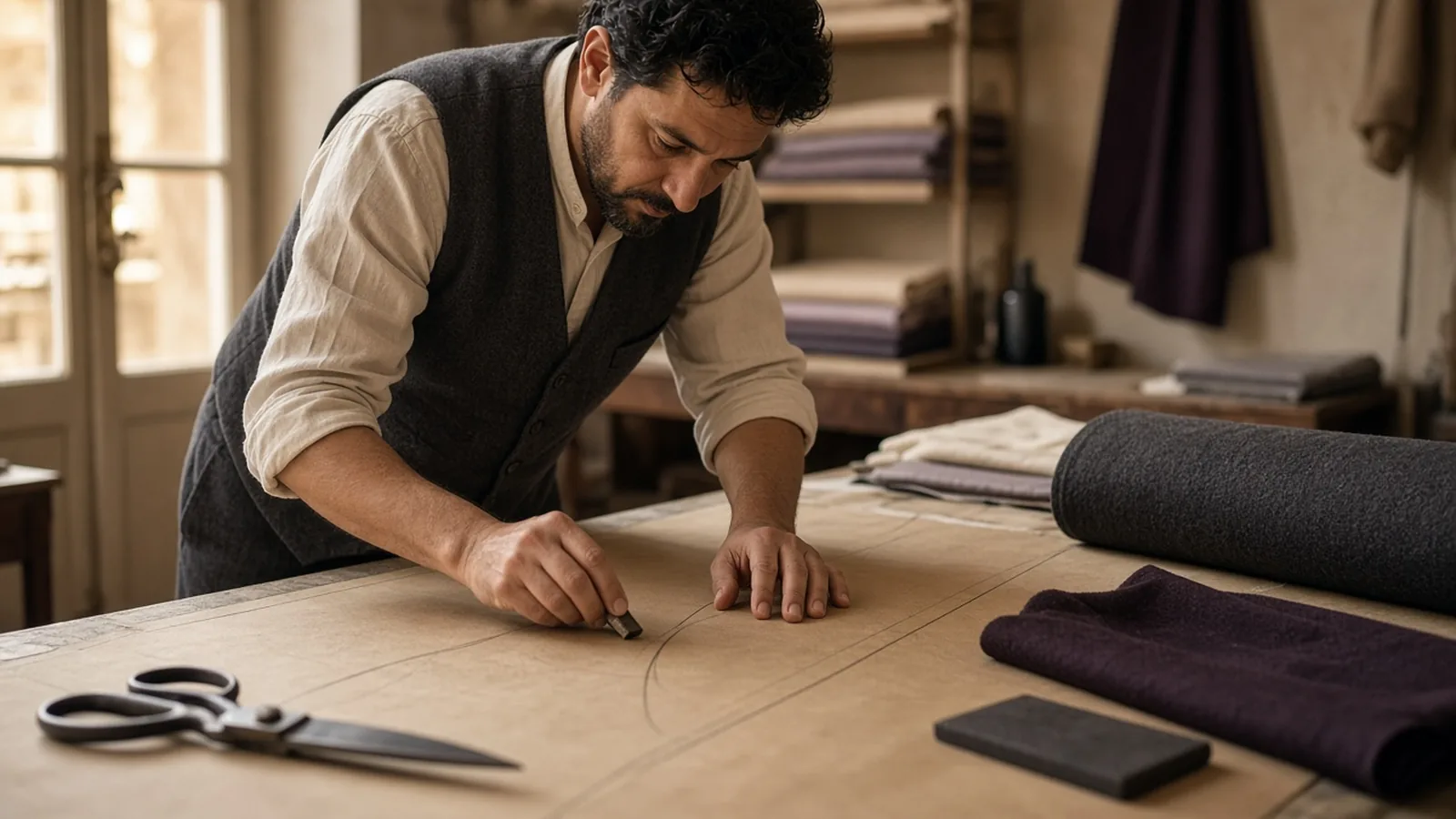
The cutter drafts a paper pattern for this person. Pattern drafting has been put at about half a day per client by one London tailor. Some cutters chalk directly on the cloth instead. Either way, one person should own the order from here to delivery.
Record: where the pattern is stored and which version is current.
4. Cutting and bundling
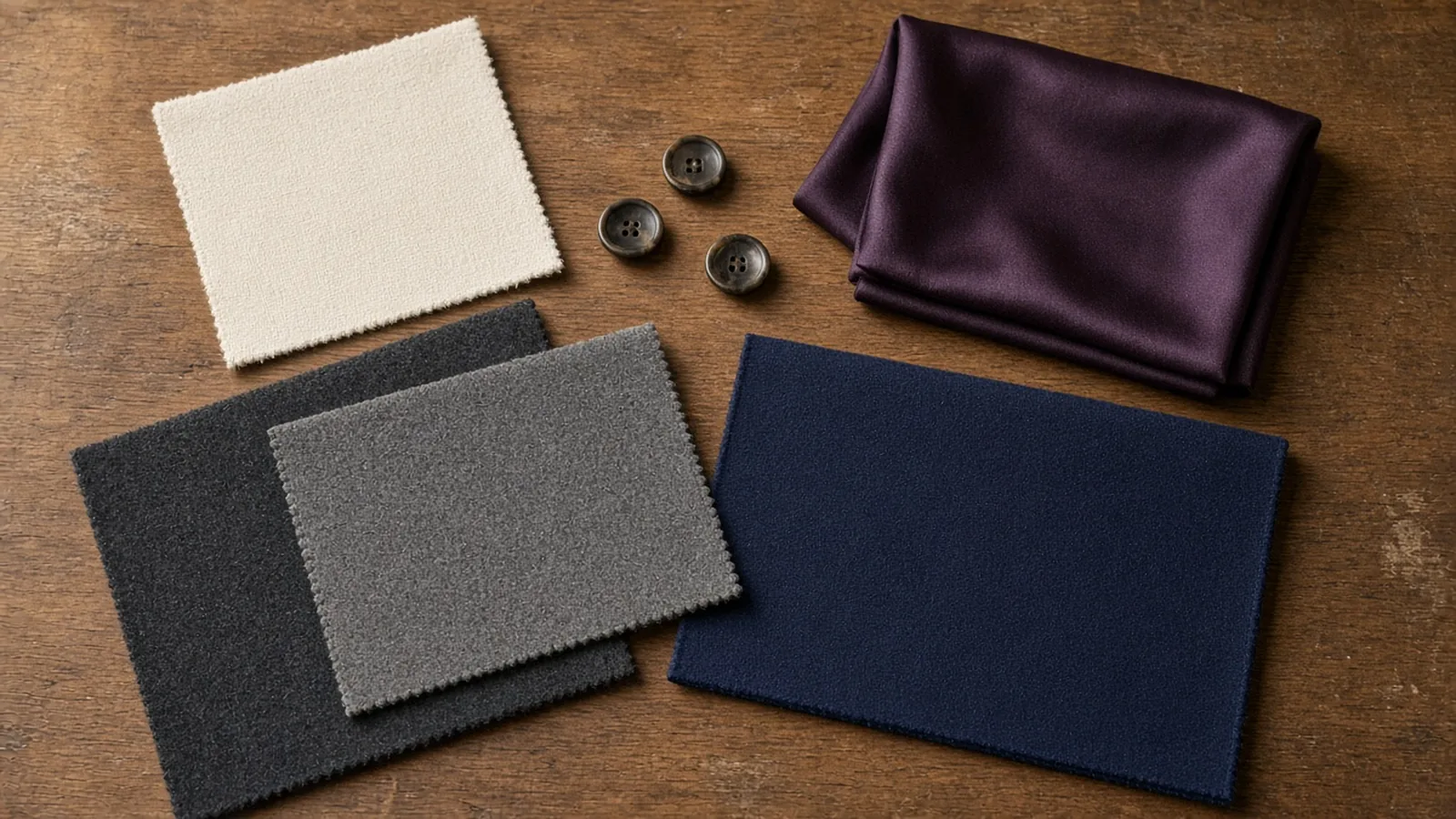
The pattern is laid on the cloth, traced with chalk and cut with shears. Canvas, lining, pocketing, thread and buttons are chosen and bundled with the cloth, ready for the maker. A missing button at this stage is a cheap fix. A missing button three weeks later holds up a delivery.
Record: the cloth issued, the length used, and anything that needs ordering. Check the bundle before it leaves the table.
5. Baste fitting
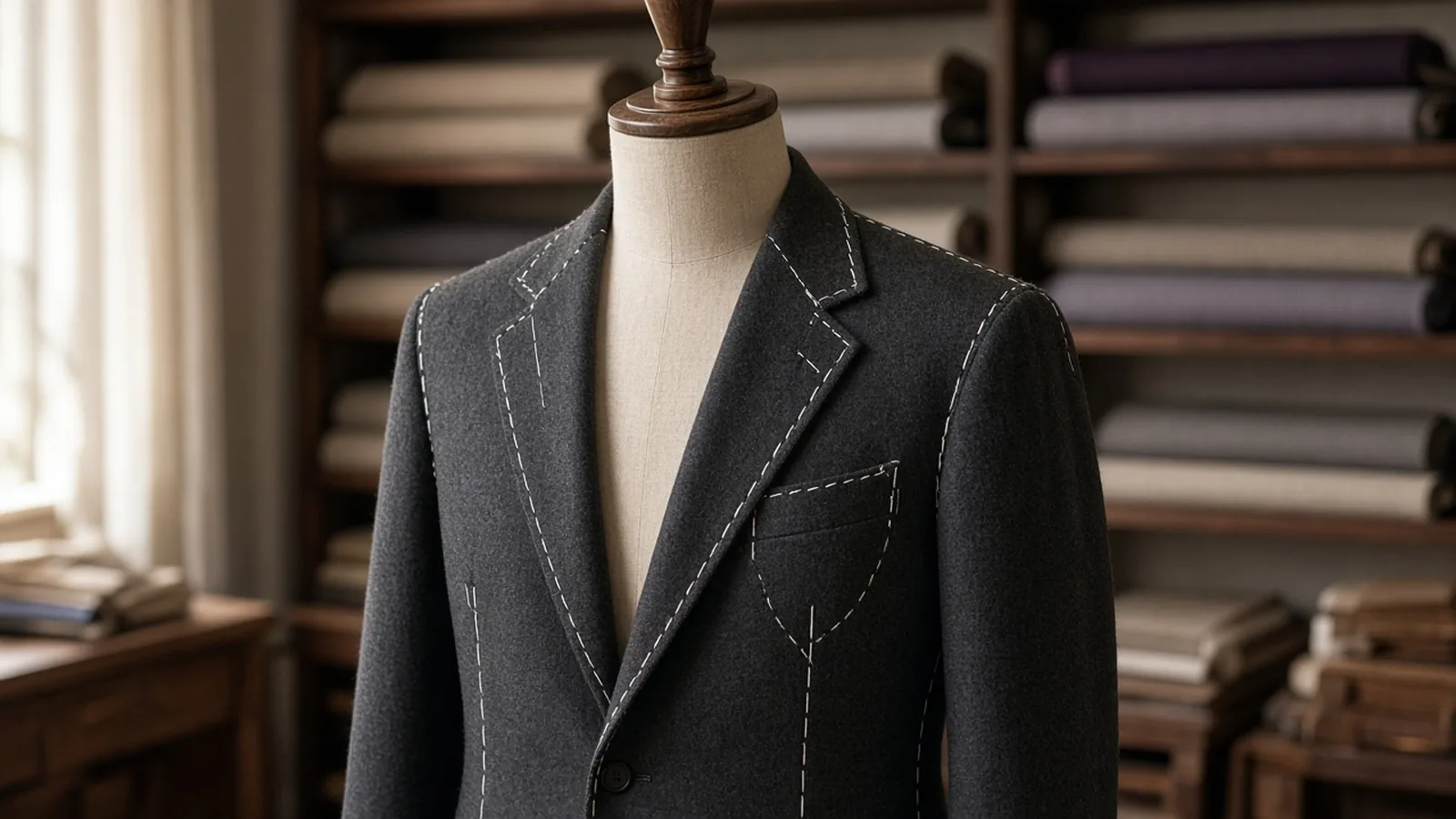
The maker tacks the garment together with long white stitches, as in the picture above. It looks rough on purpose, because everything can still be moved. The customer tries it on and the cutter judges fit, balance, size and shape.
Then comes the part customers never see. The garment is taken apart and laid flat, and the paper pattern is corrected from the chalk marks and notes. Skip this and the pattern stops matching the person, and the next order starts wrong.
Record: what changed, in plain words, and a photograph if it helps. Book the next date before the customer leaves.
6. Making up
The garment returns to the workshop for the inside work: pockets, linings, canvas and the internal structure. Larger houses use specialist coat, trouser and waistcoat makers. In a small shop the same person may do all of it.
Record: who holds the job, the date they promised, and hours worked if you cost your orders. This is the longest stage and the one where a job can vanish on a shelf. If a part goes to an outside maker, note who has it and when it is due back.
7. Forward fitting
The customer tries on a garment that now looks nearly finished, usually with the facings and pockets in. Adjustments are smaller. Fine points such as sleeve pitch and length get settled here. The changes go into both the pattern and the garment.
The published timings give a feel for the gaps. The London tailor above allows four weeks from consultation to basted fitting, five more to the next fitting, and two to three for further fittings. A maker with a full bench can push those out. One tailor's figures put a maker's output at one or two coats a week, depending on experience, so a full order book turns into a queue quickly.
Record: the changes, and whether another fitting is needed. Be honest about this in advance. Some bodies and some cloths need more.
8. Finishing
Buttonholes are worked by hand, buttons sewn on and the garment given its final press. Finishing can take two to three working days per jacket by one tailor's estimate. It sounds like a small last step, and it is often where a tight deadline breaks. Plan the days for it.
Record: a last check against the order: cloth, buttons, monogram, lining, trouser finish. Check the pockets are open and every basting thread is out.
9. Final fitting and handover
The customer wears the finished garment and any last small corrections are made. Collect the balance, and keep the pattern. The house above stores each customer's pattern for future orders, and that is what makes the second garment quicker and more accurate.
Record: payment, the date of handover, and any notes for next time.
Where bespoke orders usually slip
Few delays come from a stitch going wrong. Most come from the gaps between stages. Customers notice those gaps first. One poster on a wedding forum describes a dress that missed its promised stage at appointment after appointment. Three habits prevent most of that:
- Give every job one named owner at every stage.
- Book the next fitting at the end of the current one.
- Check the promised date whenever a job changes hands.
The numbers matter as well. Our guide to what goes into a bespoke price shows how these stages turn into a quote.
Tracking the stages
A pinned job card works well for a few orders. It gets harder when twenty are open and two people need the same information. Tailoq's preset for bespoke tailors starts with consultation, cutting, baste fitting, stitching, forward fitting, finishing and ready. You can add, rename or reorder those stages to match your own bench, and assign one person per stage per job.
See how Tailoq lays out bespoke stages, fittings and measurements.
Bespoke tailors Book a demo