Ask ten shops what bespoke means and you will hear ten answers. Most of them share three things: a pattern made for one body, fittings during the making, and a large share of hand work. Take any of those away and most tailors would call the garment something else.
A working definition
The Savile Row Bespoke Association, the trade body for tailors on that London street, gives the strictest version. Its glossary of tailoring terms says the pattern is made specifically for the customer, the suit takes a minimum of 50 hours of hand work, and it needs a series of fittings. That wording describes one street's standard, and it sets a useful upper mark. A good tailor in another city can work the same way without meeting the Association's other rules, which cover things like how close to Savile Row the work is done.
The idea also reaches well past the two-piece suit. A sherwani, an abaya, a kandura or a bridal gown can be cut from a pattern drafted for one person and corrected on the body. The method carries across. The vocabulary changes from one tradition to the next.
Where the word comes from
You will often read that the cloth had "been spoken for". It is a neat story, and one word historian says the evidence does not support it. The adjective comes from the old verb to bespeak, which by the late 1500s meant to order goods or engage someone for a job. Bespoke, in the sense of specially ordered and made, followed around the middle of the 1700s.
The word has no legal fence around it
This is worth knowing if you sell tailoring or buy it. In 2008 the UK Advertising Standards Authority looked at a complaint about a London shop advertising "bespoke" suits at £495. According to one report of the case, the suits were fitted once in London, sent abroad and mostly sewn by machine. The authority concluded that the word was "unlikely to mislead", because most shoppers would not expect a fully handmade suit at that price.
That ruling covers one advert in one country. The practical lesson is broader: the word alone tells a customer very little. A shop that works properly should say what it means by it, and a customer should ask.
The three things that make it bespoke
An individual pattern
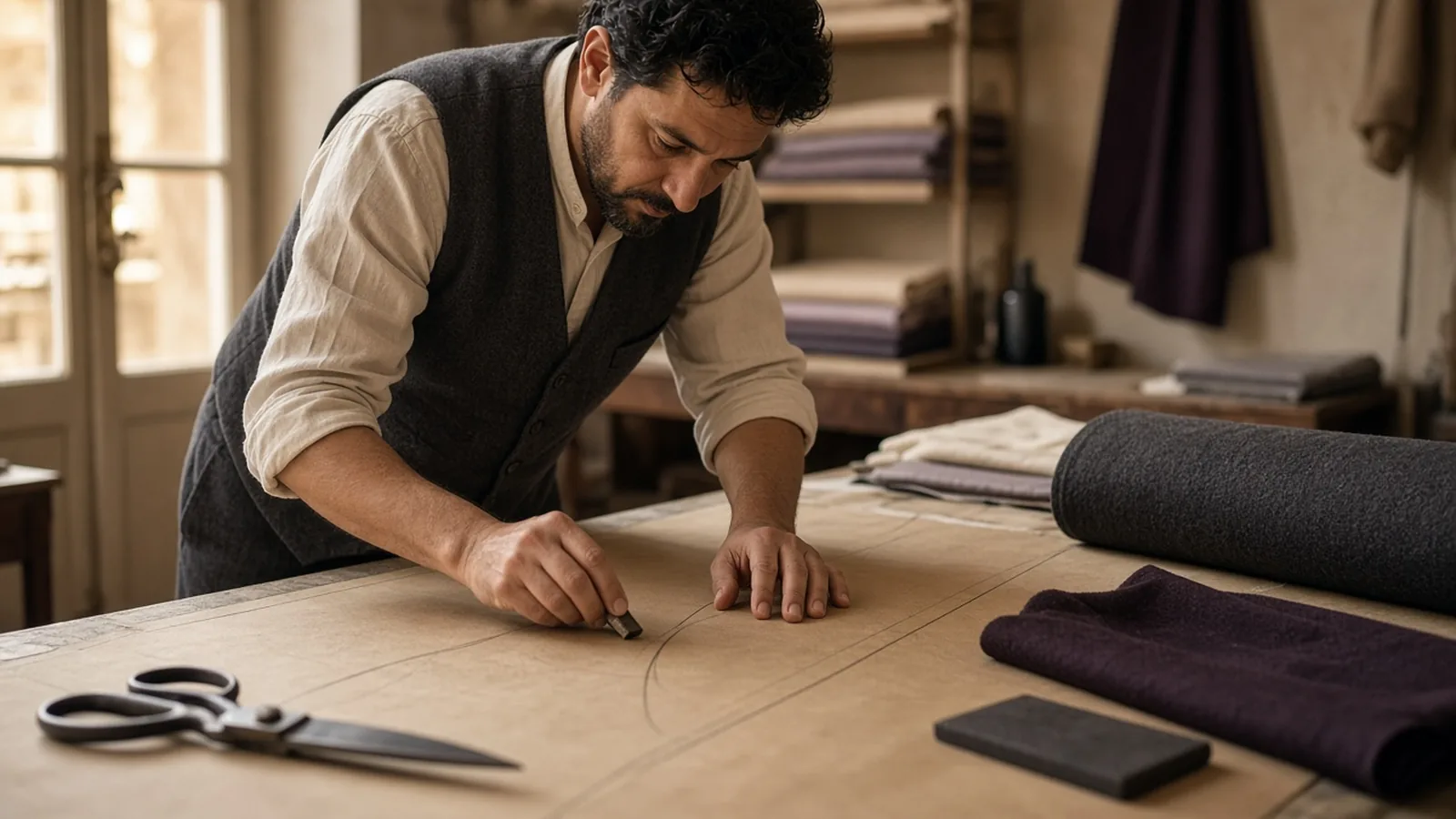
The cutter measures the customer, notes how they stand and carry themselves, and drafts a pattern from nothing. Sloping shoulders, a dropped hip or a forward head are all drawn into the paper. The Association says measurements are typically taken at around thirty points on the body. The shop keeps the pattern, so the next garment starts from what was learned on the first.
A series of fittings
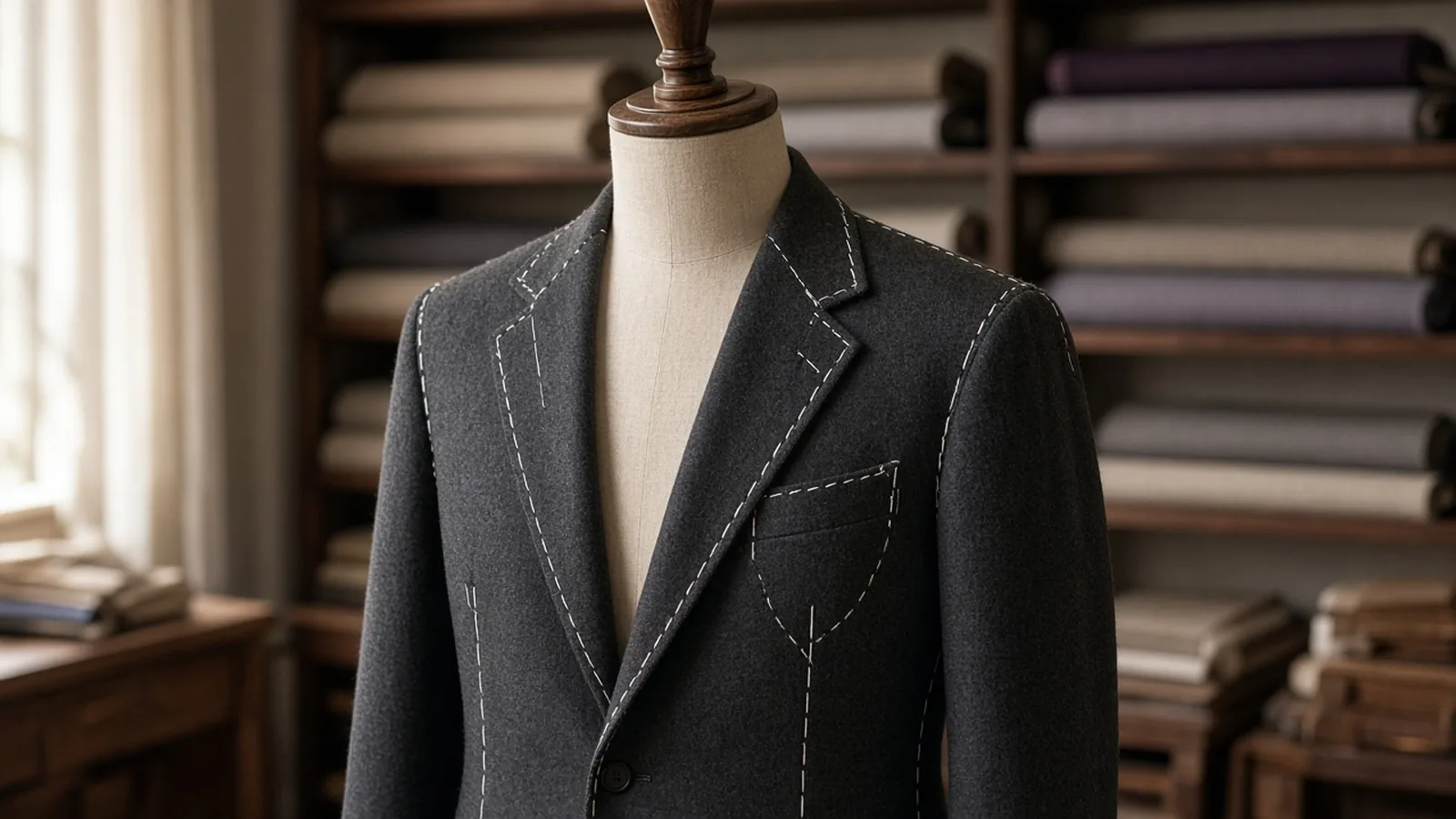
Measurements cannot tell you everything about how cloth will sit on a person. So the garment is tried on while it is still unfinished, marked up, taken apart and corrected. The Association gives a typical figure of three intermediate fittings for a suit. Each one feeds back into the paper pattern as well as the cloth. Our step-by-step guide to the bespoke process follows those stages.
Hand work where it counts
Hand work in bespoke has a structural purpose. A canvas pad-stitched by hand into the chest lets the front hold a shape. A sleeve set by hand can be eased around the shoulder. Hand-felled linings give with the movement of the wearer. Association members must hand canvass the foreparts and sew buttonholes, sleeves and linings by hand. Plenty of good tailors also use a machine for long straight seams. One menswear guide says that in bespoke all work is done by hand except pockets, facings and long seams.
How it compares with other ways of buying
| Bespoke | Made to measure | Ready to wear | |
|---|---|---|---|
| Pattern | Drafted for one person | An existing block, altered to measurements | A graded size range |
| Fittings | A series, during the making | Usually one or two | None before purchase |
| Making | Mostly by hand | Mostly by machine, varies by maker | By machine, in quantity |
| Who decides the fit | The cutter, on the body | The fitter, within what the block allows | The customer, by choosing a size |
The last row is the one customers feel. For more on where the middle column shades into the first, see made to measure vs bespoke.
Questions that reveal what a shop means
Whether you are buying a garment or writing your own shop's description, these five answers settle most of it:
- Is a new pattern drafted, or is an existing block changed?
- How many fittings are included, and at what stage of the making?
- Who cuts, and is that person at the fittings?
- Where is the garment made, and by whom?
- Is the chest canvassed by hand or fused?
Why it is a hard way to run a business
A bespoke order stays open for weeks and passes through several pairs of hands. Each garment has its own pattern, its own fitting notes and its own changes. The work rests on small records: the note about the left shoulder, the date of the second fitting, the cloth that was reserved. Lose one and the customer feels it at the next appointment.
Tailoq can hold those records for a shop like this. You can see how it handles fittings, measurements and stages on the page for bespoke tailors.
See how Tailoq follows a bespoke order from consultation to Ready.
Bespoke tailors Book a demo- Tailoring terms, Savile Row Bespoke Association
- About the Savile Row Bespoke Association
- Bespoke, World Wide Words
- Bespoke or not bespoke? A row rocks Savile Row, The National
- Savile Row tailors lose fight to preserve the term bespoke, reprinted press report
- The difference between made to measure, custom and bespoke, Bespoke Unit