The phrase "body measurement app" covers two very different things. Sort that out first, because the accuracy question applies to one of them.
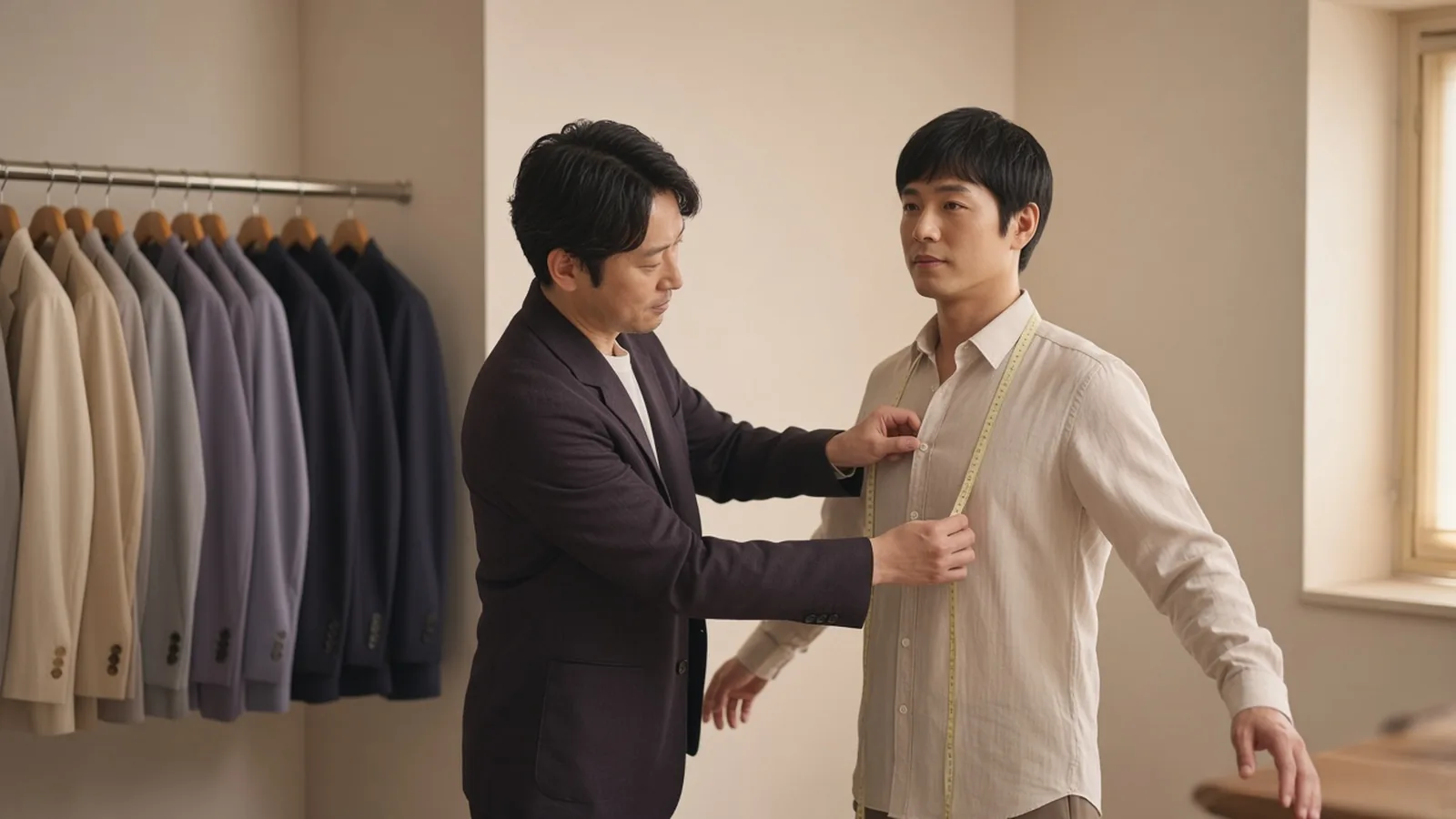
- Manual entry apps. A person takes the measure with a tape and types the number. The app stores it. Accuracy is the accuracy of the person with the tape.
- Camera-based apps. The customer stands in front of a phone, the software builds a body model from images, and it produces measurements. Some use a depth sensor as well.
Camera-based tools are attractive for remote orders, because the customer need not visit. The fair question is how far you can trust the output.
What the studies show
Most published work on these tools comes from health, sports and scanning research, and few studies look at garments. A 2025 systematic review in BioMedical Engineering OnLine covered 13 studies of smartphone and tablet 3D scanners. Two of them compared against tape or classical manual measuring. The authors could not run a meta-analysis, and they recommended standard protocols and further development. So any confident claim of accuracy should make you ask for the data.
Two of the studies give a feel for the size of the differences.
| Study | Set-up | Compared with tape |
|---|---|---|
| Smith et al., 2021 | Phone app, 10 adults, waist, hips, mid-thighs, upper arms | Absolute errors of 0.79 to 1.96 cm. Root mean square errors of 1.32 to 3.97 cm |
| Bušić et al., 2020 | Depth sensor on a tablet, 51 volunteers in form-fitting underwear | Average relative error of 1.5% at the hips, 2.3% at the waist, 4.4% at the chest, 4.8% to 5.3% at the upper arms |
In the second study, the average chest was 95.64 cm by tape and 99.57 cm by scanner, a gap of 3.93 cm. Its authors said the two methods should not be treated as interchangeable. The first study had a very small sample, and both tested particular tools, so neither result tells you about the app a vendor is showing you today.
Conditions in a study are also kinder than a customer's bedroom. Volunteers wore fitted underwear and followed a set posture, with someone running the session.
What that means for a garment
Whether an error matters depends on the garment. Example only: take a fitted jacket with 8 cm of ease at the chest. An error of about 3.9 cm, the size of the gap above, would use up nearly half of that ease. On a loose kandura or abaya with far more room, the same error may pass unnoticed at the chest, though length and shoulder still need care.
As a rough guide from workshop logic:
- Looser fit, size selection. A camera estimate can be a useful guide for choosing a size or as a starting point.
- Made-to-measure. Treat it as a first draft, and plan for a fitting before you cut anything costly.
- Bespoke and bridal. It cannot replace hands, a tape and a fitting. A scan will not tell you how a shoulder sits in cloth or how the wearer stands when relaxed.
Typical sources of error
- Clothing. Loose or layered clothes hide the body. Ask what the app needs the customer to wear, and whether that is realistic for them. Some customers will not be comfortable being photographed in fitted clothes, so offer a choice.
- Posture. The researchers in the second study linked upper arm differences to changes in elbow extension and arm position. A person holding a pose for a camera is not standing as they usually do.
- Breathing and soft tissue. That study also pointed to breathing movement at the chest. A tape and a scanner also treat the body differently, since a scanner follows the contour.
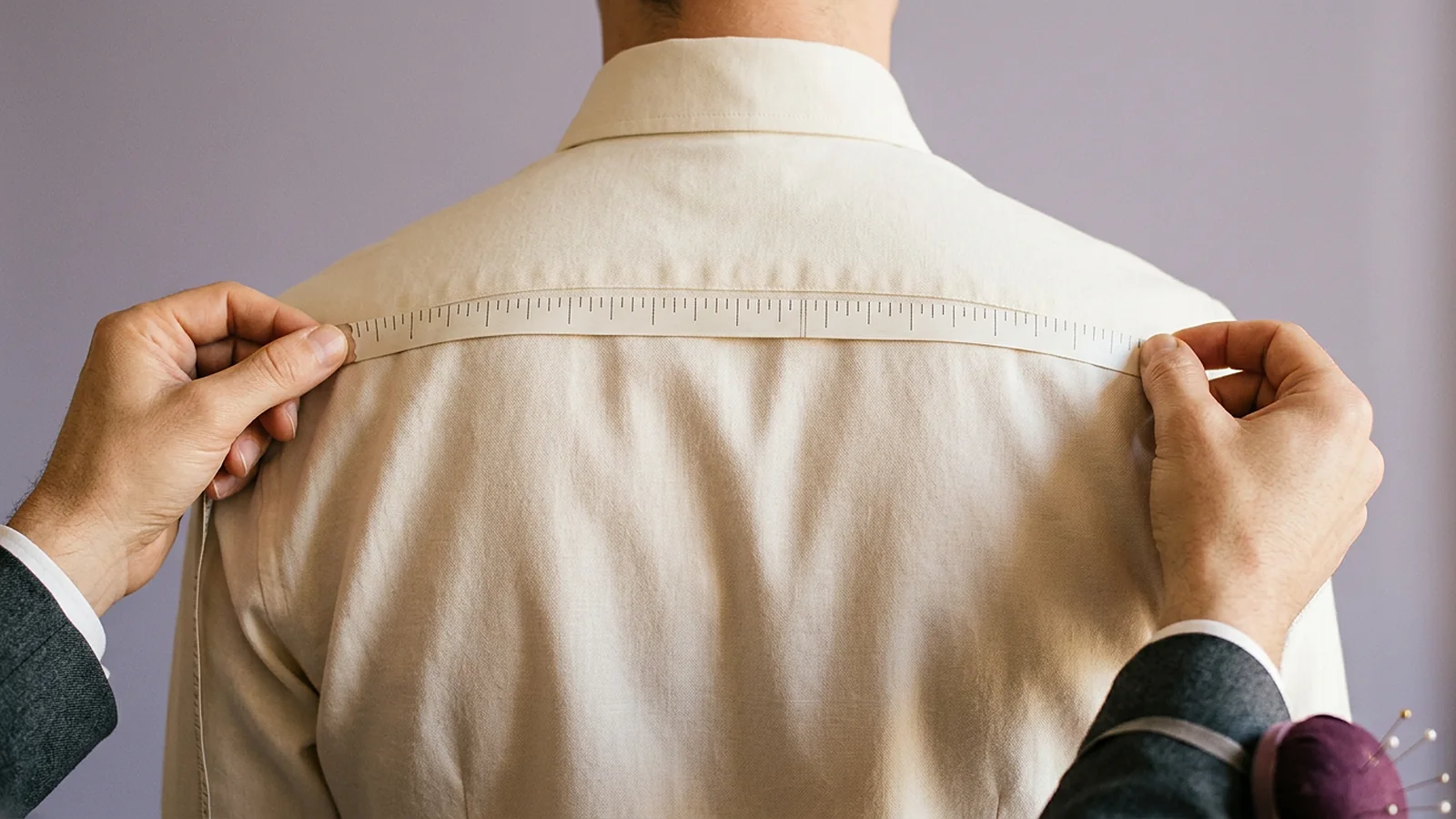
- Landmarks. A tailor feels for the shoulder bone. Software has to estimate it from a shape. Where the measure begins matters as much as the length of it.
- Setup. Lighting, phone distance and background can all affect a capture. Follow the vendor's instructions, and ask what happens with a poor scan.
- Definitions. An app's "waist" may not be your waist. Compare it with your house method before you use any number.
Test any app on your own customers
- Pick ten people of different builds, with their agreement.
- Take your usual measures with a tape, and write them down.
- Run the app on each person in normal conditions.
- Compare measure by measure. Note the largest gaps as well as the average, because one bad miss spoils a garment.
- Repeat the scan on two people. If the app disagrees with itself, the number cannot be trusted.
Then ask the vendor for published test results on the same measures you use, and for how they treat customers' body images and data.
When to re-measure at the fitting
Whatever the source of the numbers, a few moments call for a tape:
- The first order from a customer whose numbers came from an app.
- Any garment that is fitted through the chest, shoulder or waist.
- Costly or customer-supplied cloth, where a recut is not an option.
- Any figure that looks out of line with the rest of the set.
- Any gap of more than a few months since the last set, or a known change in weight.
Store the result with the order
Write down where each number came from. A set marked "scan" and a set marked "tape, fitting one" should never look the same to a cutter. Date each set, and keep the older one when you take a new one. If a garment does not fit, you can then see which numbers were used.
For the tape routine, see how to measure for tailoring. For storing numbers, see measurement app vs book.
Tailoq is on the manual side of this divide. It does not measure from photos. You type in numbers taken by a person, and each save keeps a new dated set by garment, so you can compare a first set with one from a fitting.
See how Tailoq stores measurements as dated sets you can compare.
Measurements Book a demo- Scataglini et al., Smartphone and tablet-based 3D scanner for anthropometric assessments in adults: a systematic review, BioMedical Engineering OnLine, 2025
- Smith, Dechenaud and Heymsfield, Anthropometric Evaluation of a 3D Scanning Mobile Application, 3DBODY.TECH 2021
- Bušić et al., Comparison of Manual Anthropometry and a Mobile Digital Anthropometric System, icSPORTS 2020