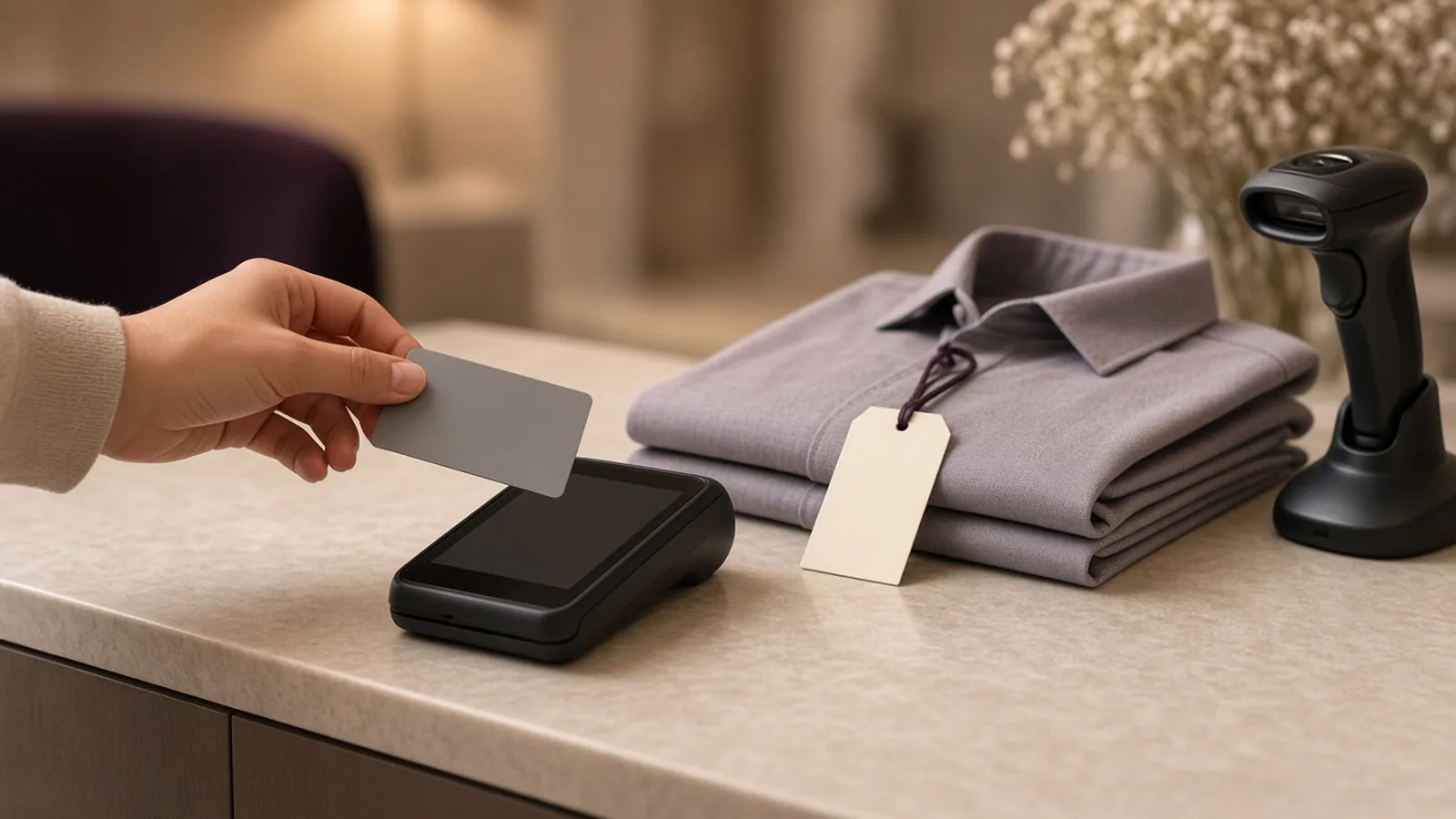

A grocery sale opens and closes in a minute. A wedding sherwani can open with a deposit in March, change twice at fittings, and close when the customer collects in May. Most billing trouble in a tailoring shop comes from that gap. The money arrives in pieces, and the garment changes while it does.
So general billing software often fits badly. It assumes you hand over the goods and take the money at the same moment. Before you pick a tool, go through the five jobs below with your own paperwork on the desk.
Invoices and receipts
Keep the two apart in your head. An invoice says what is owed. A receipt says what was paid. A tailoring order often needs one invoice and several receipts.
What an invoice must show depends on where you trade and whether you are tax registered. In India, for example, Rule 46 of the CGST Rules lists the contents of a tax invoice, including GSTIN, a serial number unique within the financial year, an HSN code, a description, the taxable value, and the rate and amount of tax. Other countries set their own lists, so ask your tax office or accountant for the current one. Then hold a sample from the software against it, line by line.
Test these on a trial:
- Can it print or send a real document, or are the figures on screen and nowhere else?
- Does an order with three garments show three lines?
- Are invoice numbers in sequence, with no way to reuse one?
- Can a receipt show the amount paid today and the balance left?
Printers are worth checking early as well. If you plan to use a small receipt printer, run a real test on your own machine during the trial, before you pay.
Tax rates
Three questions cover most of this.
Are your prices inclusive or exclusive of tax? Counter customers usually want one figure. Business customers often want the net price and the tax shown apart. Check that the software works the way you quote.
Do you need more than one rate? Some shops sell items and services taxed differently. If yours does, a tool with one rate per shop will leave you doing sums by hand.
What happens when a rate changes? Old invoices should stay as they were issued. New ones should pick up the new rate.
Here is the sum inside a tax-inclusive price. Example only, at a 5% rate: a suit priced at 1,050 is 1,000 net plus 50 tax, because 1,050 divided by 1.05 is 1,000.
Deposits and advance payments
This is where tailoring differs most from retail, and where a shop can get its tax timing wrong. In some countries a deposit counts for tax the day you receive it, well before the garment is finished. The UK's VAT Guide (Notice 700) says most deposits are advance payments that create a tax point when received. India's GST Council guidance on invoices requires a receipt voucher, or a similar document, from a registered person who takes an advance. Your own rules may differ, so ask how your country treats them.
Here is an order worked through, at the same 5% rate.
| Step (example) | Amount | Balance left |
|---|---|---|
| Suit and shirt, tax included | 1,050 | 1,050 |
| 50% deposit on the day | 525 | 525 |
| Part payment at the fitting | 200 | 325 |
| Final payment at collection | 325 | 0 |
The 525 deposit in this example holds 500 net and 25 tax. Ask the vendor to show you all three payments on one order, with the running balance. Then ask what happens to the balance if the customer adds a waistcoat after the deposit is paid.
Alteration charges
Alterations sit awkwardly in billing, because the same job can be free or chargeable. Your first hem on a new suit may be included. Letting out the same suit a year later is paid work.
Decide your rules first, then see whether the tool can follow them:
- A separate alteration ticket for walk-in work, priced from your list.
- A charge added to an open order when a customer changes their mind after cutting.
- A way to mark included work at zero, so the workshop still sees the job.
- Rush work shown as its own line, so a customer can see why the total moved.
If your charges are still in your head, write them down first. Our guide to building a tailor price list covers minimum charges and rush work.
Records and exports
Your billing records are your business history, and you may need them for a tax return or a dispute years from now. Ask your accountant how long your country requires you to keep them.
- Can you export orders and payments to a file you can open in a spreadsheet?
- Does the day's cash total match the drawer, by payment method?
- Can you find a customer's old invoice by name or phone number?
- Can you take your data with you if you leave?
Rules are moving in some countries towards invoices sent in a set electronic format. If your shop is in the UAE, our guide to e-invoicing for tailors explains what applies.
Run one awkward order
A demo will always use a tidy order, so bring your own. Use a past job with a deposit, a second garment added late, customer's fabric, a paid alteration and two later payments. If the balance comes out right and you can see how it got there, the tool can probably cope with your counter.
Tailoq is built around that kind of order. Its point of sale takes a deposit and tracks later payments against the balance, and it shows net and tax on screen at your rate. It closes the day's cash and exports to CSV. It does not print invoices or receipts yet, so a shop that must hand over a printed tax invoice should keep its invoice book for that part. Our tailor invoice template will do the job.
See how Tailoq handles deposits, later payments and balances at the counter.
POS Book a demo